
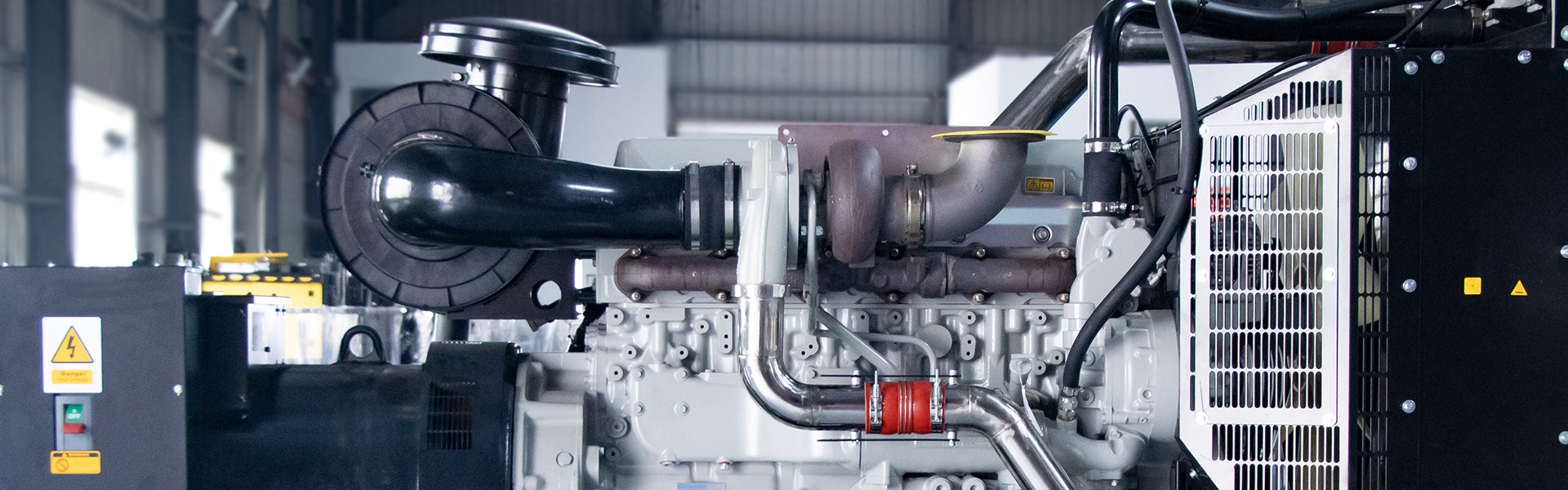
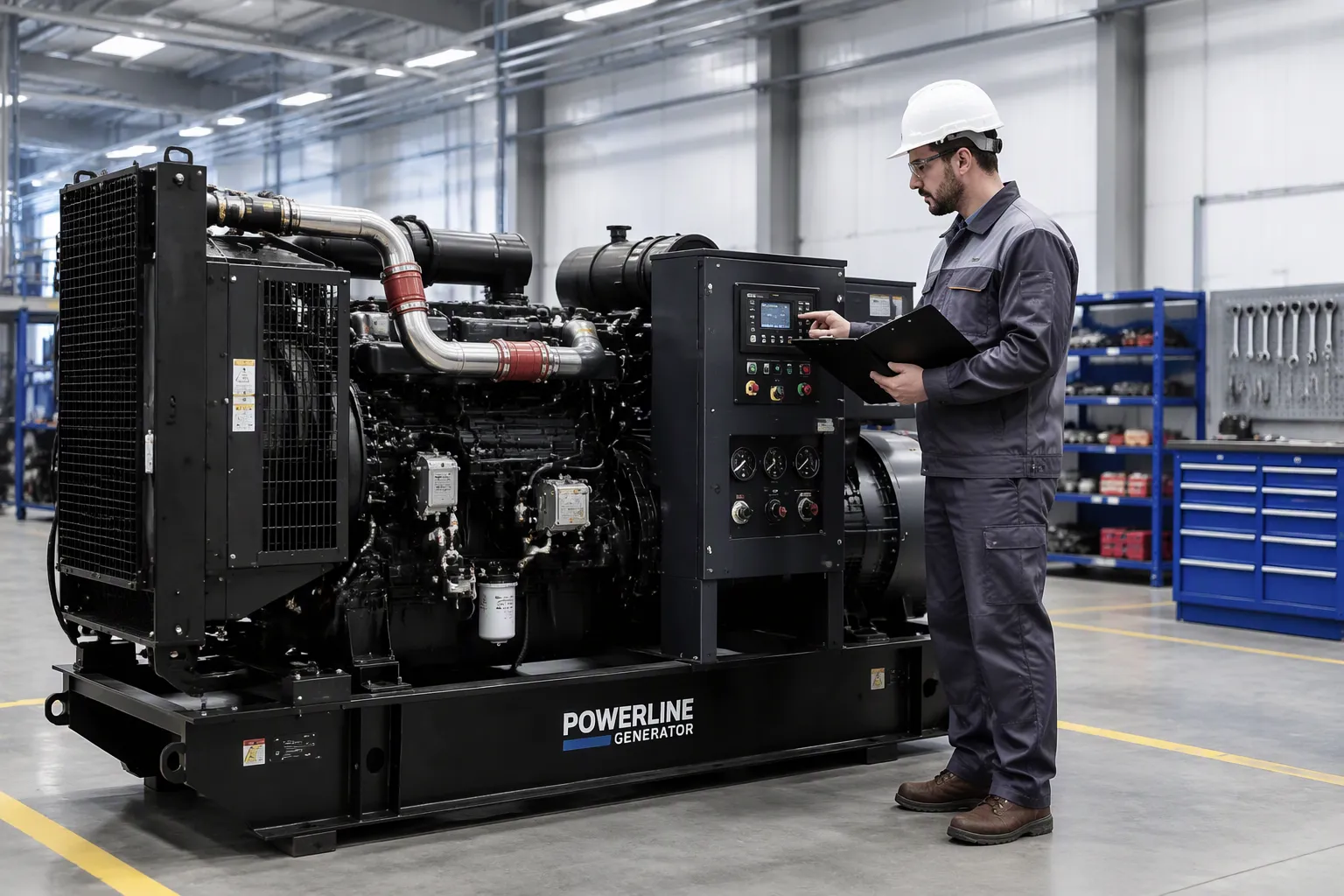
Choose a reliable diesel generator manufacturer China buyers trust by verifying certifications, factory audits, and customer reviews. Due diligence before payment prevents most sourcing disasters. This guide gives you a step-by-step verification process you can apply immediately.
Verify the manufacturer's business license and certifications through official databases before you pay.
Inspect the engine, alternator, and test reports to confirm the generator's quality and performance.
Check warranty terms and spare parts availability to ensure you get reliable after-sales support.
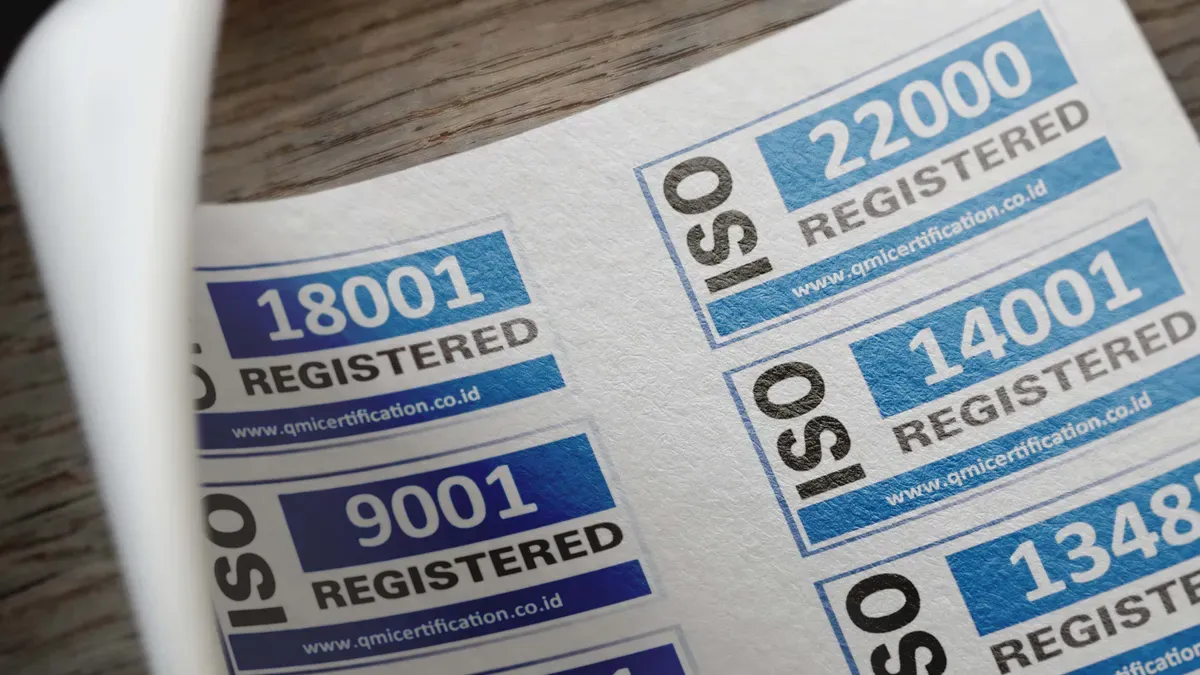
Credentials form the foundation of every sourcing decision. A supplier can show you a polished catalog and a convincing price list. Paperwork tells you whether the company legally exists, whether an independent body has audited its quality system, and whether it has actually shipped generators abroad. You should treat this step as a filter. Most unreliable suppliers fail here, and you save yourself the cost of a failed order.
Start with the business license. Every legitimate Chinese company holds a unified social credit code, an 18-character identifier you can look up on the National Enterprise Credit Information Publicity System (gsxt.gov.cn). Confirm three things on that record: the registered company name matches the name on the quotation, the registered capital is realistic for the order size, and the business scope includes generator manufacturing or assembly. A trading company with a scope limited to "machinery sales" may still be a valid partner, but you should know whether you are buying from a factory or a middleman.
Export rights deserve separate attention. Since 2022, China has simplified foreign trade registration, so most manufacturers can export directly. Ask for the company's customs registration code and its exporter record. A supplier without export experience will route your order through a third-party trading agent. That arrangement adds a layer between you and the factory, and it complicates warranty claims later.
Cross-check the license against the bank account. The account name on the proforma invoice must match the licensed company name exactly. Payment to a personal account or to an unrelated company is one of the most common warning signs in generator sourcing.
Certificates are easy to print and easy to fake. You need to verify each one at its issuing body, not simply accept a PDF. The table below shows the certifications that matter most for a diesel generator manufacturer China buyers can rely on, along with what each one actually covers.
|
Certification / Standard |
Scope / Requirement |
|---|---|
|
ISO 8528 |
Defines applications, ratings, performance, and characteristics of generator set components (engines, alternators, controls, switchgear); covers functional and acceptance tests including vibration and sound measurement; specifies a 70% average load factor over 24 hours relative to nameplate kW |
|
ISO 3046 |
Engine characteristics: power ratings, fuel consumption, vibration; typically noted on specification sheets |
|
ISO 9001 |
Quality management system requirements; for example, MTU facilities hold ISO 9001:2015 certification |
|
ISO 14001 |
Environmental management practices for manufacturing |
|
ISO 17025 |
Testing and calibration of instruments used in performance and quality measurement; ensures traceability to national standards |
Beyond the ISO family, check the certifications your destination market demands. The list below covers the ones you will encounter most often:
ISO 8528 — defines generator-set ratings, performance, and test methods, so you can compare standby and prime-power claims on equal terms.
ISO 9001:2015 — verifies the manufacturer's quality system, including traceability, corrective actions, and inspection records. Request signed test reports, not just the certificate.
ISO 14001 — environmental control certification.
ISO 45001 — occupational safety certification.
CE marking — requires conformity assessment, risk documentation, and a Declaration of Conformity. A logo alone is insufficient.
EU Stage V (Regulation (EU) 2016/1628) — sets emission limits for non-road engines, including particulate-number controls for several power categories.
EPA Tier 4 — U.S. emission requirements that can cut particulate matter and nitrogen oxides by up to 90% versus earlier tiers.
UKCA — may be required depending on the destination market, alongside CE or emissions documentation.
Verify ISO 9001 through the certification body's online registry. For CE, ask for the Declaration of Conformity and the name of the notified body that performed the assessment. For emission certificates, request the engine manufacturer's certificate of conformity, because the generator assembler inherits emission compliance from the engine supplier.
Years in business mean little without export depth. Ask the supplier how many units it shipped in the past 12 months, which countries received them, and which voltage and frequency standards those markets use. A manufacturer with steady shipments to Africa, the Middle East, and Southeast Asia understands 50 Hz systems and harsh-environment packaging. A supplier with strong European references will handle CE documentation and Stage V engines well.
Request two or three shipment records with the buyer's permission. Bill of lading copies, customs declarations, and dated factory test reports together form a credible track record. You can also check the company's profile on trade platforms and its participation in industry exhibitions such as the Canton Fair. Consistent presence over several years suggests a stable operation.
Watch for mismatches. A company that claims 20 years of history but registered its license three years ago deserves a direct question. A supplier that lists dozens of export destinations but cannot name a single repeat customer deserves skepticism. Document every claim you verify, and note the source. This record protects you if a dispute arises later.
Credentials tell you whether a supplier is legitimate. Product quality tells you whether the generator will survive its first year of operation. You need to look past the paint and the catalog photos. Three components determine the real value of a diesel generator: the engine, the alternator and control system, and the testing regime behind the finished unit. Evaluate each one with specific questions and documented answers.
The engine is the most expensive component in the generator set. It also determines fuel consumption, service intervals, and the availability of spare parts for the next decade. You should never accept a generic label such as "branded engine" or "international brand." Ask for the exact model number, the manufacturing plant, and the emission certificate tied to that engine.
Cummins engines are favored for durability, reliability, and relatively low cost, with widely available affordable spare parts. Counterfeit and refurbished units have been reported in the market, so you must verify the engine serial number with the authorized distributor. Perkins, a leading diesel manufacturer since 1932 producing nearly 400,000 units per year, has its only Chinese production base at the Wuxi factory. That plant manufactures the 400 and 1106 series engines, including the 403, 1104, and 1106 series exported worldwide. Yuchai, described as the largest China generator manufacturer, offers diesel generators from 16 kW to 1000 kW with brushless alternators and H-class insulation, suited to industrial, commercial, and residential use.
The table below maps the engine brands you will encounter most often to their origin and manufacturing basis.
|
Engine Brand |
Origin / Manufacturing Basis |
|---|---|
|
Global brand; produced in China via joint ventures Dongfeng Cummins (DCEC, est. 1995, Hubei) and Chongqing Cummins (CCEC, est. 1995, Chongqing) |
|
|
Perkins |
Global brand; China factory in Wuxi (opened 2008) producing 403, 1104, 1106 series |
|
SME Mitsubishi |
Joint venture between Mitsubishi Heavy Industries (Japan) and Shanghai Diesel Engine Co. (SDEC), based in Shanghai |
|
Deutz |
German brand Deutz AG; subsidiary Deutz (Dalian) Engine Co., a joint venture in Dalian |
|
Yuchai |
Domestic Chinese manufacturer of diesel engines and generators |
|
Weichai |
Domestic Chinese manufacturer (Weichai Power) |
|
SDEC |
Domestic Chinese manufacturer (Shanghai Diesel Engine) |
|
FAW (FAWDE) |
Domestic Chinese manufacturer (First Automobile Works Diesel Engine) |
|
Quanchai |
Domestic Chinese manufacturer (Anhui Quanchai Engine Co., est. 1949) |
|
Yangdong |
Domestic Chinese manufacturer (Yangdong Co., est. 1954) |
Each brand carries a different risk profile. The list below summarizes the background you should confirm for the major names.
Perkins: Founded 1932; opened a factory in Wuxi in 2008 producing 403, 1104, and 1106 series engines exported worldwide.
SME Mitsubishi: Joint venture between Mitsubishi Heavy Industries (MHI) and Shanghai Diesel Engine Co. (SDEC), based in Shanghai; covers 625 kVA to 2273 kVA.
Deutz: Subsidiary of German engine manufacturer Deutz AG; Deutz (Dalian) Engine Co. is a joint venture between Deutz AG and Chinese partners.
Yuchai: One of the top three diesel engine manufacturers in China; power range 20 kVA to 2000 kVA.
Weichai: One of China's top three diesel engine manufacturers; initially collaborated with Deutz and later acquired Baudouin.
SDEC: One of China's top three diesel engine manufacturers; a state-owned enterprise with decades of engine manufacturing experience.
FAWDE: One of the oldest engine manufacturers; engines widely used in FAW brand trucks.
Quanchai: Founded 1949; engines widely used in construction machinery, with 500,000 engines sold annually.
Yangdong: Established 1954; known for reliable engines and technological innovation.
A genuine Cummins or Perkins engine carries a premium price. A quote that undercuts the market by 30% while claiming a premium engine brand deserves suspicion. Ask the supplier to show the engine nameplate in a photo or video, and compare the serial number against the manufacturer's database. This single check eliminates the most common substitution trick in the industry.
The alternator converts engine rotation into electrical power. The control system governs voltage, frequency, and protection. Together they determine whether your sensitive equipment survives a power interruption. Key quality indicators include load balancing mechanisms, power factor correction, and voltage regulation circuits that keep electrical output consistent under load fluctuations and prevent overloading. Automatic voltage regulators, frequency controllers, and power factor correction devices maintain stable electrical parameters, protect connected equipment from voltage fluctuations, and preserve grid synchronization during parallel operation. Advanced control systems use electronic control units and sensors to regulate fuel injection timing, air-fuel mixture, and combustion efficiency in real time, preventing engine knock, reducing emissions, and ensuring consistent power output.
Vendor solutions reinforce these indicators. ABB emphasizes advanced excitation systems for voltage stability during load transients, sophisticated overload protection, redundant control systems, and automatic transfer switches. Generac's Evolution Controller provides real-time monitoring and automatic load shedding, supported by oversized alternators and robust voltage regulation that limit frequency and voltage deviations during sudden load changes.
When you review an alternator datasheet, check these specific attributes.
Regulation accuracy: tolerance of ±1% or better; ±0.5% for critical or sensitive equipment.
Stability adjustment: fine-tunes AVR response to load changes, preventing voltage hunting and oscillation.
Remote voltage control: enables safe voltage adjustment from a control room.
Low-frequency protection: reduces output voltage when engine frequency drops, protecting the generator and connected systems.
Build quality and environmental ratings: must withstand vibration, temperature swings, and moisture; encapsulated designs suit harsh conditions.
Compatibility with brushless alternators: the AVR must be designed for brushless systems used in most modern diesel generators.
The control system itself falls into two broad tiers. The table below contrasts them so you can match the specification to your application.
|
Attribute |
Basic system |
Advanced system |
|---|---|---|
|
Programmability |
Limited (potentiometer adjustments) |
High (software-based, customizable parameters) |
|
Features |
Basic voltage regulation, some droop/stability |
Load sharing, fault diagnostics, remote monitoring, multiple sensing options |
|
Cost |
Generally lower |
Generally higher |
|
Complexity |
Simpler circuitry |
Microprocessor-based, more complex |
|
Maintenance |
More sensitive to vibration/temperature |
Robust, less susceptible to environmental factors |
A basic control panel suits a standby home backup unit. A hospital, data center, or manufacturing plant needs the advanced tier with remote monitoring and load sharing. Ask the supplier to name the alternator brand and the control module model. Leroy-Somer, Stamford, and Mecc Alte are common premium alternator brands. Deep Sea Electronics and ComAp dominate the control module market. A supplier who cannot name these components is assembling from whatever stock is available that week.
Every generator should leave the factory with a test report. The question is whether that report follows a recognized standard or a homemade checklist. International standards give you a common language for comparing suppliers. The table below lists the standards that apply to diesel generator testing.
|
Standard |
Title / Scope |
|---|---|
|
ISO 8528-1 |
Application, ratings, and performance |
|
ISO 8528-2 |
Engines |
|
ISO 8528-3 |
Alternating current generators |
|
ISO 8528-4 |
Controlgear and switchgear |
|
ISO 8528-5 |
Generating sets |
|
ISO 8528-6 |
Test methods |
|
ISO 8528-8 |
Requirements for low-power sets |
|
ISO 8528-10 |
Measurement of airborne noise |
|
IEC 60034-1 |
Rotating electrical machines – rating and performance (referenced) |
|
IEC 60034-5 |
Rotating electrical machines – degrees of protection (referenced) |
|
IEC 60204-1 |
Safety of electrical equipment (referenced) |
|
IEC 60364-4-41 |
Protection against electric shock (referenced) |
|
ISO 12100 |
Machine safety principles (referenced) |
|
ISO 13850 |
Emergency stop function principles (referenced) |
The ISO 8528 series defines the test and safety requirements that apply alongside the individual part standards. The scope statement makes the relationship clear:
"This document deals with the special requirements of test and safety design which are observed in addition to the definitions and requirements in ISO 8528-1:2018, ISO 8528-2:2018, ISO 8528-3:2020, ISO 8528-4:2025, ISO 8528-5:2025, ISO 8528-6:2023 and ISO 8528-10:2022, where applicable."
Ask for the actual test report, not a certificate of compliance. A credible report includes the unit serial number, the test date, the ambient conditions, the load steps applied, and the measured voltage and frequency at each step. Look for a load test at 25%, 50%, 75%, and 100% of rated capacity, plus a brief overload test. The report should show fuel consumption at each load point. A supplier who sends a one-page sheet with a single "passed" stamp has not tested the unit to any meaningful standard.
Compare the test report against the datasheet claims. If the datasheet promises ±0.5% voltage regulation but the test report shows ±2%, you have found a discrepancy worth questioning. Request the raw data if the summary looks too clean. Legitimate manufacturers keep test logs for every unit, and they can retrieve the record for your specific serial number. This traceability separates a real factory from a trading desk.
A generator is a long-term asset. After-sales support determines how quickly you recover when something fails. You should treat warranty terms and service channels as part of the purchase price, not as an afterthought.
Warranty terms vary widely across Chinese manufacturers. You need written terms with clear duration, coverage, territory, and claim process. A verbal promise is not enforceable. Typical terms include:
Standard engine warranty: 12 months or 1,000 running hours, whichever comes first.
Base engine warranty: 2 years or 2,000 operating hours, covering defects in material or workmanship.
Extended major components warranty: up to 3 years or 10,000 hours, covering the cylinder block, camshaft, crankshaft, and connecting rods.
Warranty risk also depends on the exporter type. Factory-direct OEM manufacturers carry the lowest risk. Authorized export agents carry medium risk. Trading companies carry the highest risk, because they must negotiate claims with a factory that may not recognize the sale. Ask where spare parts are stocked, what the lead time is for a replacement AVR or starter motor, and whether a service partner exists in your country.
Spare parts availability decides how long your generator stays offline. Ask the supplier to confirm which parts it stocks locally and which parts it orders from the engine OEM. A common complaint involves exporters who acknowledge claims but delay resolution for months because they hold no inventory. Request a written parts list with lead times for critical components such as control modules, fuel injectors, and voltage regulators.
Technical support should reach you through multiple channels. The table below shows how major manufacturers structure their support.
|
Manufacturer |
Support Channels |
Notes |
|---|---|---|
|
Cummins |
24-hour service, spare parts, remote diagnostics |
Network of 2,000+ service providers in China |
|
Perkins |
Dealer direct sales, technical assistance, after-sales service |
Phone and email channels available |
|
Weichai |
Warranty, installation guidance, training, inspections |
Covers defective parts and shipping costs |
|
Yuchai |
Technical assistance, spare parts, maintenance |
Fast response and high satisfaction reported |
Remote diagnostics now play a larger role. Cloud-connected control modules let you monitor voltage, fuel level, oil pressure, and temperature from a mobile device. Automated alerts flag anomalies before they become failures. Confirm that your supplier offers remote monitoring and a documented claim response time.
Price is the easiest number to compare and the least useful on its own. A cheap quote today can cost you far more over ten years of operation. You need to benchmark the quote, screen for unrealistic offers, and model the full cost of ownership before you sign.
Collect at least three quotes for the same specification: same kVA rating, same engine brand, same alternator, same control module. Normalize each quote to include freight, duties, and compliance documentation. A quote that looks 15% lower often excludes these items. Compare the adjusted totals, not the headline prices.
Aggressive pricing usually hides a missing cost. The table below lists the warning signs you should screen for.
|
Warning Sign |
What It Looks Like |
Why It Signals a Too-Good-To-Be-True Deal |
|---|---|---|
|
Suspiciously low entry price |
Platforms advertising very low prices (e.g., ~€3,498 for a 10 kVA unit) across a wide capacity range |
Import duties and VAT are often excluded, and EU conformity documentation is not guaranteed unless explicitly stated |
|
Missing or unverifiable CE marking |
"CE" stickers present but without a notified body number |
Valid CE marking must include a notified body number (e.g., 0197, 2797) and an EU Type Examination Certificate referencing Regulation (EU) 2016/1628 |
|
No EU compliance documentation |
No EU Stage V confirmation or Type Examination Certificate |
Stage V compliance adds roughly €300–€900 versus Stage IIIA, so a price that ignores this cost is a red flag |
|
Unclear warranty enforcement |
Warranty terms not clearly stated or enforceable |
Ambiguous warranty enforcement is a known con of low-entry-price import platforms |
|
Unexplained price gaps for similar kVA |
Large price differences among units with the same kVA rating |
Price should reflect engine brand, cooling type, noise engineering, and compliance level—not just kVA |
Fuel and maintenance dominate the lifetime cost of a generator. Modern units use electronic control units, optimized combustion, turbochargers, and intercoolers to manage fuel injection precisely and cut cost per kilowatt-hour. Several factors drive your total cost of ownership down:
Fuel efficiency: diesel generators convert up to 45% of fuel energy into electrical power, and some modern models exceed 40% efficiency.
Maintenance: durable engine designs reduce service frequency, and standardized parts keep costs competitive. Nearly 30% of generator failures stem from inadequate maintenance, so a fixed schedule protects your investment.
Lifespan: an operating life of roughly 15,000 to 50,000 hours spreads the initial investment over many years.
Monitoring: advanced systems optimize fuel consumption and flag problems early.
Resale value: generators hold resale value, which lowers your net cost.
Brand choice matters here. Weichai engines deliver high torque and fuel efficiency. Perkins units run smoothly and durably. Chinese manufacturers now design engines for high efficiency and low emissions. Over time, these savings offset a higher purchase price.
Paperwork and quotes only go so far. You need to see the production line and the test bench with your own eyes. A factory audit and a sample test turn promises into proof.
Ask any diesel generator manufacturer China buyers shortlist to open its doors. A trustworthy supplier will invite the audit. Walk the floor and check the details that photos hide.
|
Audit Area |
What to Check |
|---|---|
|
Manufacturing process |
Inspect welds and cable routing; confirm engine label, alternator rating, insulation class, and protection grade match the datasheet |
|
Factory testing |
Review load-test records, voltage stability data, noise measurements, and fuel-consumption results; watch a run at 50%, 75%, and 100% load |
|
Traceability |
Component batch records, inspection checkpoints, clear serial numbers, and spare-parts storage |
|
Quality systems |
Verify ISO 9001, ISO 14001, and ISO 45001; confirm certificate scope and validity for your market |
|
Production capability |
Engine assembly areas, automated winding equipment, controlled wiring stations, and a calibrated load bank |
Order one unit before you commit to volume. Request a factory acceptance test with a written report tied to the serial number. The test should cover step load acceptance per ISO 8528-5, alarm and shutdown checks, and alternator insulation resistance. Witness the test in person or by recorded video with data overlays. On receipt, photograph the unit, verify the nameplate against the purchase order, and log any deficiency on a punch list before you release the carrier.
Do not settle for a certificate PDF. Ask for test reports, batch inspection records, QC process summaries, warranty procedures, spare parts lists, and troubleshooting guidance. Confirm which tests run before shipment. Review the export documentation workflow, packaging procedures, and warehouse conditions. A supplier with nothing to hide will hand over every record you request.
Reviews and references give you a reality check on every claim you have verified so far. They show how a manufacturer behaves after the invoice is paid.
Read reviews for recurring themes, not single complaints. For silent diesel generators, user experience usually centers on noise control, starting convenience, power stability, maintenance, and portability. Distributors hear from retailers, contractors, farmers, repair teams, and small business owners. Their expectations differ, yet most want a unit that starts easily, holds steady under load, and stays simple to maintain. Noise deserves special attention, especially for residential sites. Check that the model meets local noise regulations and that the soundproof enclosure performs as advertised.
Always request performance data and customer reviews. This practice can help gauge reliability before finalizing the purchase.
Ask for three contactable customers in your region who received similar equipment within the last two years. Genuine exporters can typically provide these. A response of "all our clients are confidential" should be treated as a warning sign that no real references exist. References carry the most weight when they involve similar generator sets, comparable export regions, or similar operating conditions. A manufacturer that discusses comparable projects in practical detail inspires more confidence than one making broad claims about sales volume.
Confirm certifications by exact model. Ask which model is covered, which engine family is listed, and which test standard was used. Request the certificate and test report before you order. Test the sample under load at 50% and 100%, with sudden load changes and hot and cold starts. Record the engine, control panel, and other key components once the sample passes, then require the production order to match that approved sample.
You have a verification checklist in hand. Now you need a supplier that passes every item on it. Lehui built its reputation by meeting those standards openly, and the three strengths below show why buyers return to this diesel generator manufacturer China sourcing guides frequently recommend.
Lehui holds ISO 9001, ISO 14001, and ISO 45001 certifications, and the company welcomes virtual or on-site factory audits. You can inspect the assembly lines, the calibrated load bank, and the test records yourself. Every unit ships with a serial-numbered test report that covers load steps at 25%, 50%, 75%, and 100% capacity. Nothing stays hidden behind a catalog photo.
Lehui stocks critical components such as control modules, fuel injectors, and voltage regulators. You receive a written parts list with lead times before you order. The support team answers technical questions through phone, email, and remote diagnostics. Warranty claims follow a documented process with defined response times, so you never wait months for a resolution.
Lehui prices its generator sets against real market benchmarks. You get genuine engine brands, premium alternators, and full compliance documentation in every quote. The company avoids the shortcuts that create suspiciously low prices. You pay a fair rate for verified quality, and your total cost of ownership stays low across the unit's service life.
Verify credentials, quality, support, pricing, audits, and references before you pay. Treat due diligence as an investment, not an expense. Screen every diesel generator manufacturer China offers with this checklist. Document each step, and confirm every claim before you commit.
Look up the company's 18-character unified social credit code on gsxt.gov.cn. Confirm the registered name matches your quotation, the business scope covers generator manufacturing, and the bank account name matches exactly.
Check for ISO 9001, ISO 8528 test compliance, and CE or EPA documentation for your market. Verify each certificate through the issuing body's registry. Request serial-numbered test reports, not just certificate PDFs.
A virtual audit costs nothing. An on-site third-party audit typically runs $300 to $800. Treat this as insurance against a failed order worth thousands. Lehui welcomes both audit types openly.
 NO.2 XIAHE ROAD GANZHE STREET,MINHOU COUNTY,FUZHOU FUJIAN CHINA
Please read on, stay posted, subscribe, and we welcome you to tell us what you think.


Copyright @ 2026 LEHUI (FUZHOU) INTELLIGENT EQUIPMENT MANUFACTURING CO., LTD All Rights Reserved.
 Network Supported
 English
 français
 Deutsch
 italiano
 русский
 español
 português
 العربية
 Melayu
 Indonesia

