
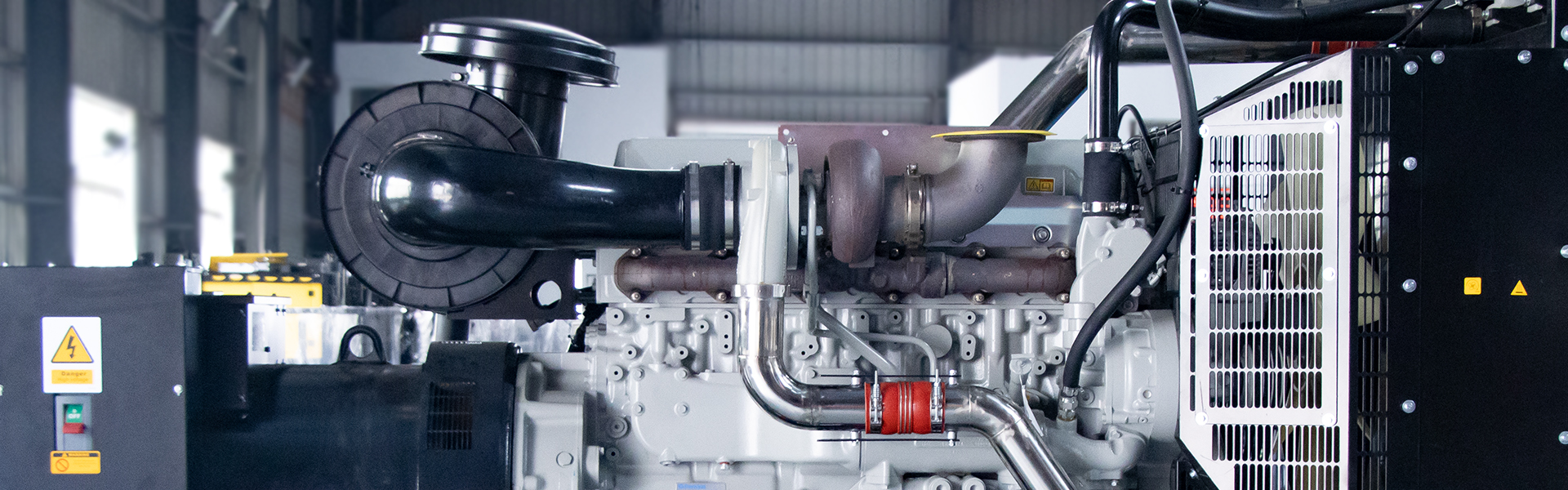
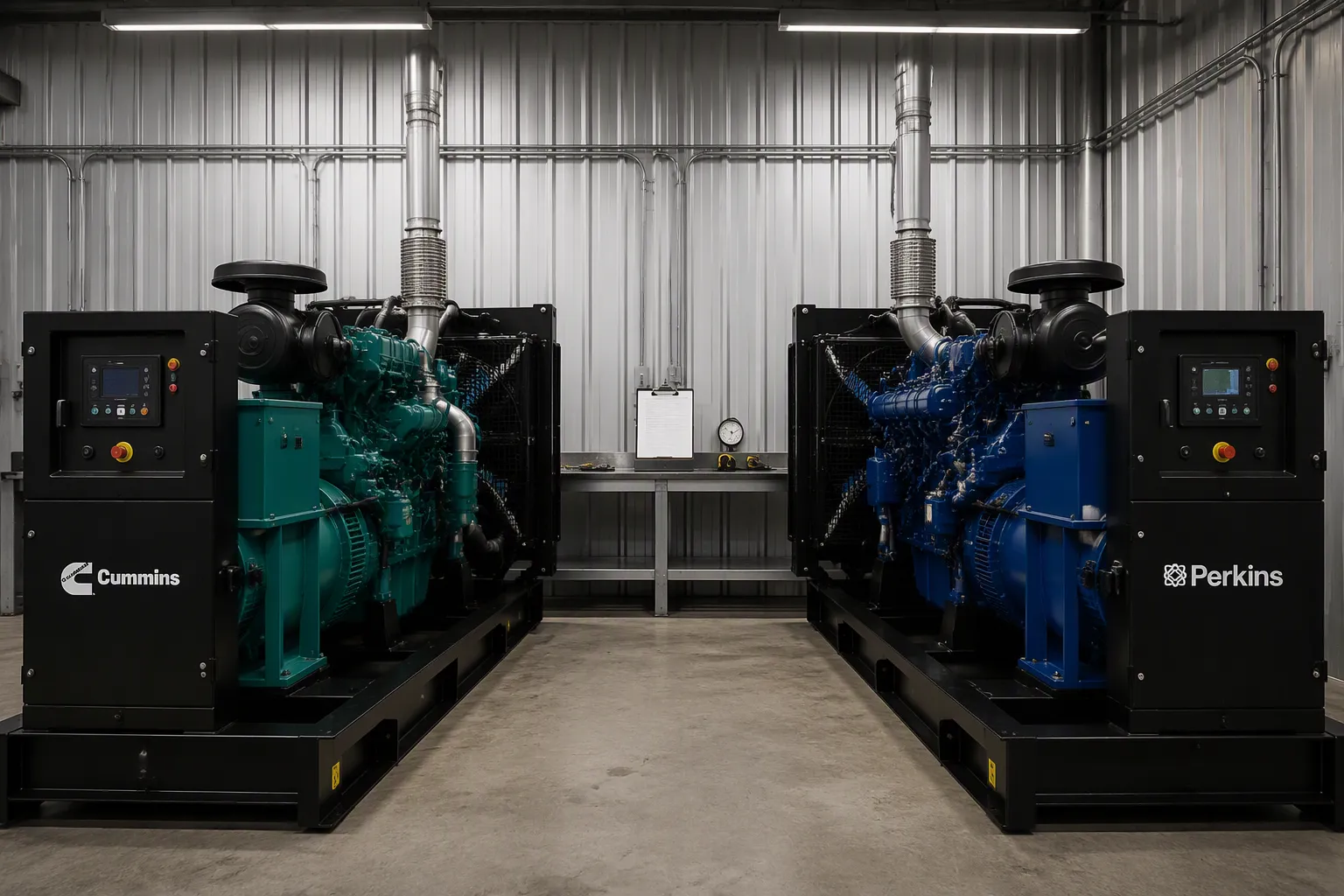
You want a diesel generator that runs the longest before major overhaul. A Cummins diesel generator set typically achieves 20,000–30,000 hours in heavy-duty applications. Perkins engines reliably reach 15,000–20,000 hours under lighter, continuous loads. The brand that lasts longer depends on your load profile and service regimen.
A Cummins diesel generator lasts 20,000 to 30,000 hours in heavy-duty use. A Perkins generator lasts 15,000 to 20,000 hours under lighter loads. Your choice depends on your work.
Regular maintenance adds thousands of hours to your generator. Follow the service schedule for oil, filters, and checks. This practice extends engine life more than brand alone.
Use a Cummins engine for high-hour, heavy loads like mining. Use a Perkins engine for steady, lighter loads like telecom. Match the generator to your specific job.
Before you compare brands, understand that both Cummins and Perkins deliver long service lives. A Cummins diesel generator set often reaches 20,000 to 30,000 hours in demanding applications. Perkins engines consistently achieve 15,000 to 20,000 hours under lighter, continuous loads. The right choice depends on your specific operating conditions.
You get a reliable engine designed for extended operation whether you choose Cummins or Perkins. Each brand has engineered its products to withstand thousands of hours of use. Your maintenance habits and load profile determine how many hours you will actually achieve.
Cummins engines are proven in the most demanding industries. The Cummins KTA38 operates reliably in mining, oil and gas, data centers, and industrial continuous power systems. The table below shows the key advantages that make a Cummins diesel generator set suitable for high-hour, heavy-duty roles.
|
Advantage Category |
Supporting Details |
|---|---|
|
Proven in Heavy-Duty Industries |
Widely used in mining, oil & gas, power generation, data centers, and industrial systems |
|
Key Advantages for High Hours |
Stable long-term operation, low failure rate, global spare parts support, mature maintenance system |
|
Continuous Running Performance |
Suitable for prime power, continuous load operation, and remote site power supply |
|
Durability in Harsh Environments |
Higher durability and better environmental adaptability for demanding sites globally |
|
Suitability for 24/7 Operations |
Large displacement, high reliability, strong load capacity, excellent continuous running capability |
Perkins engines perform best under lighter, continuous loads. They offer reliable operation in telecommunications, small manufacturing, and agricultural lighting. Their design emphasizes fuel efficiency and longevity in steady-state conditions.
Regular maintenance is essential for extending the lifespan of any diesel generator. You should perform a monthly visual inspection and loaded run test for standby generators, plus a full service every 6–12 months. Prime power generators need servicing every 250–500 operating hours. Preventive maintenance addresses small issues early, reducing downtime and repair costs. A typical schedule includes:
Daily: Check oil, coolant, fuel, and battery electrolyte levels; inspect exhaust system for leaks.
Weekly: Inspect air filter and fan belt; check for fluid leaks.
Monthly: Change oil and oil filter; inspect fuel system and clean fuel filter.
Every 500 hours: Replace air filter, adjust valve clearance, replace fuel filter and coolant.
Every 1000 hours: Replace engine oil and filter, adjust valve clearance, clean cooling system, inspect generator brushes.
Following this schedule helps your generator reach its maximum service life.
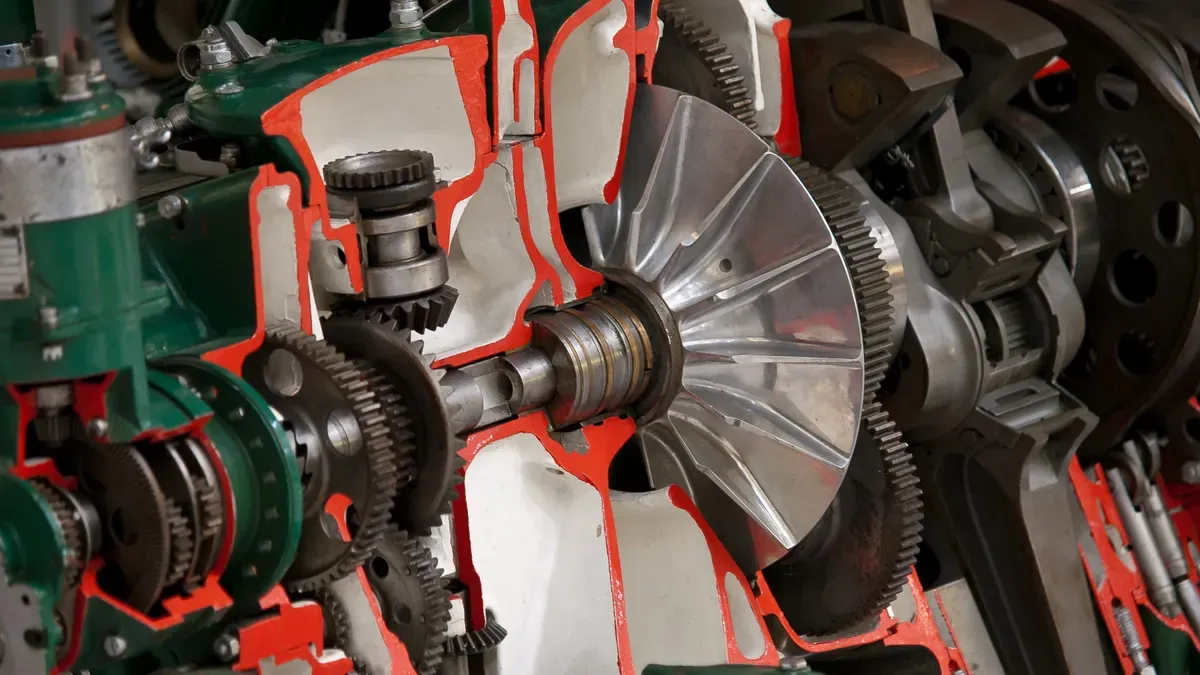
You evaluate engine design when you compare diesel generator brands. Cummins and Perkins each build engines with distinct architectural choices. These choices affect durability and service life.
A Cummins diesel generator set uses an inline six-cylinder configuration. This design ensures smooth operation and superior balance. It reduces vibration-related wear on internal components. The bottom end features massive main bearings and connecting rod bearings. Seven main bearings support a forged steel crankshaft. These elements contribute to exceptional bottom end durability. Replaceable wet cylinder liners enable in-frame overhauls. This restores performance without complete engine replacement. A modular design facilitates these overhauls and minimizes downtime. The cast iron block and head provide exceptional strength and thermal stability. Forged steel connecting rods and crankshaft handle tremendous combustion forces. Advanced engine management systems optimize performance and protect components from damage. Conservative, proven designs reflect documented million-mile capability.
|
Cummins Architecture Feature |
Contribution to Extended Overhaul Intervals |
|---|---|
|
Inline six-cylinder configuration |
Ensures smooth operation and superior balance, reducing vibration-related wear |
|
Robust bottom end with massive bearings |
Designed for extended service, supporting million-mile durability |
|
Seven main bearings supporting forged steel crankshaft |
Contributes to exceptional bottom end durability |
|
Replaceable wet cylinder liners |
Enable in-frame overhauls that restore performance |
|
Modular design |
Facilitates in-frame overhauls and minimizes downtime |
|
Cast iron block and head |
Provides exceptional strength and thermal stability |
|
Forged steel connecting rods and crankshaft |
Handle tremendous combustion forces and reduce fatigue |
|
Advanced engine management systems |
Optimize performance and slow wear accumulation |
Perkins engines feature a robust design for continuous light loads. They use durable components that resist wear in steady-state conditions. Their architecture prioritizes fuel efficiency and reliable operation.
Both brands use high-quality materials. Cummins emphasizes heavy-duty components for high-hour applications. Perkins focuses on precision tolerances for consistent performance. Your load profile determines which design suits your needs.
When you operate a Cummins diesel generator set in heavy-duty applications, you typically achieve 20,000 to 30,000 hours before major overhaul. Specific models demonstrate this durability. The Cummins QSK series, for example, regularly exceeds 25,000 hours in mining and oil and gas operations. The QSL and QSX series deliver similar performance in industrial continuous power roles. These engines maintain stable operation under high loads because of their robust bottom end construction, forged steel components, and conservative design parameters. Owners report that regular preventive maintenance extends these intervals further, with some units reaching 35,000 hours in well-managed fleets.
Perkins engines reliably achieve 15,000 to 20,000 hours under lighter, continuous loads. The Perkins 1100 and 1200 series power many telecommunications and small manufacturing applications where load profiles remain steady. These engines thrive in applications that operate at 50% to 75% load continuously. Owners who run Perkins generators in agricultural lighting, water treatment, and backup power systems report consistent performance within this range. The key factor for Perkins longevity is maintaining steady loads and following the manufacturer's service intervals precisely.
Fuel efficiency matters because it directly affects your operating costs. The table below compares published specific fuel consumption (SFC) values for typical Cummins and Perkins engine series at 75% load. These values represent manufacturer datasheet numbers, which closely match real-world performance.
|
Brand |
Engine Series (Example) |
Typical SFC at 75% Load |
Calculated Consumption at 250 kVA / 75% Load (150 kW) |
|---|---|---|---|
|
Perkins |
1103A / 1104C / 1106D / 2506J |
200–215 g/kWh |
37.9 L/hr (Perkins 1106D-E70TAG5, 210 g/kWh) |
|
Cummins |
QSB / QSL / QSX / QSK |
195–210 g/kWh |
36.4 L/hr (Cummins QSL9-G7, 202 g/kWh) |
Cummins shows a slightly lower SFC range than Perkins, giving you a modest fuel advantage of about 1.5 liters per hour at 250 kVA and 75% load. Real-world differences of 1 to 2 liters per hour between comparable generator sets are normal. Your actual consumption varies by load level. At full load, expect roughly 0.2 liters per kVA per hour. At half load, consumption drops to about 0.13 liters per kVA per hour. Your generator operates most efficiently between 50% and 80% of its rated load. Below 30% load, fuel efficiency declines, and the risk of wet stacking increases.
Both brands deliver competitive fuel economy. Your specific load profile, fuel quality, and ambient conditions determine the exact consumption you observe. If you select a Cummins diesel generator set for your application, you can expect these fuel consumption figures.
A Cummins diesel generator set delivers strong heavy-load performance. The company manufactures its own engines in-house. This control over production supports consistent quality and reliable power for mission-critical projects. Advanced diagnostics and remote monitoring help you track engine health in real time. You get fast spare parts response in many markets, especially the Gulf region. These traits make Cummins a preferred choice for data centers and mega projects.
You pay a higher purchase price for a Cummins diesel generator set. The advanced technology adds cost upfront. Total cost of ownership can also run higher over time. These engines depend on disciplined maintenance and strong service support. If your maintenance routines are weak, reliability may suffer.
Perkins engines start fast and hold dependable power during long outages. Owners report stable running with minimal vibration, low fuel and oil consumption, and low noise. A 100 kVA standby unit may save $1,500–$2,500 per decade on fuel. Roughly 13% lower lifecycle cost applies in the sub-200 kVA class. Over 80% of Perkins standby units remain in service past 20 years. A broad global service network simplifies parts access.
Perkins generators often cost more upfront than some competing brands. Some models run noisy and may need soundproofing. Larger units demand careful installation and transport planning, which adds cost. Diesel exhaust may require emissions control measures under local regulations. These engines also suit semi-continuous loads better than continuous 24/7 operation.
You may want another option that balances durability, support, and cost. LEHUI diesel generators give you a proven choice for many power applications.
LEHUI builds generator sets with robust engines and alternators. These units handle demanding loads with stable output. The company uses high-grade materials for critical components. This approach extends service life and reduces wear. LEHUI generators perform well in construction, agriculture, and backup power roles. You get reliable starting and consistent voltage regulation. The cooling system manages heat effectively during long runs. Vibration control protects internal parts from fatigue. Many owners report strong performance after thousands of operating hours. LEHUI also offers multiple power ratings to match your specific needs. You can select a model for standby, prime, or continuous duty. Each unit undergoes strict testing before shipment. This quality control process ensures dependable operation from day one.
LEHUI maintains a wide distribution network across many regions. You can find authorized dealers and service centers in key markets. The company stocks common spare parts for fast delivery. This reduces your downtime when repairs are necessary. LEHUI provides technical documentation and maintenance guides. Their support team helps you troubleshoot issues quickly. You also receive warranty coverage that protects your investment. The brand offers competitive pricing compared to premium alternatives. This makes LEHUI an attractive option for budget-conscious buyers. Global availability means you can source parts and service wherever you operate. LEHUI continues to expand its presence in international markets. You gain a reliable partner for your power generation needs.
You should select a Cummins diesel generator set for applications with sudden, massive load steps. These environments include mining operations, data centers, hospitals, and oil fields. Cummins engines deliver high instantaneous torque and maintain fuel efficiency at peak capacity. A Cummins diesel generator set also suits remote industrial sites that need continuous or emergency power. Prime models last 10 to 15 years before major overhaul. The B10 life equivalent exceeds 500,000 km. These traits make Cummins ideal for mission-critical power where failure is not an option.
Large industrial generators and backup power stations serve remote industrial sites, data centers, hospitals, and oil fields.
Stationary power generation supports backup generators for hospitals, industrial facilities, and data centers.
Perkins engines perform best in stable, consistent base-load power applications. You get quieter mechanical operation and 5–10% better fuel efficiency at standard steady loads. The Perkins 2000 series boasts 82% survival past 20 years in typical standby scenarios. High parts interchangeability supports long-term maintenance. Choose Perkins for telecommunications, small manufacturing, agricultural lighting, and water treatment where loads remain steady.
Your load profile and budget determine the right engine. The table below summarizes key guidelines.
|
Guideline Aspect |
Cummins |
Perkins |
|---|---|---|
|
Load Profile |
Preferred for sudden, massive load steps; better fuel efficiency at peak capacity |
Preferred for stable, consistent base-load power; quieter operation; better fuel efficiency (5–10%) at steady loads |
|
Budget |
Higher initial capital above 200 kVA, offset by longer maintenance intervals and superior fuel economy under heavy stress |
Lower initial purchase price below 200 kVA; routine maintenance costs reduced by up to 75% parts commonality; potential 13% lifecycle cost advantage |
|
Longevity |
Prime models last 10–15 years before major overhaul; B10 life equivalent over 500,000 km |
Perkins 2000 series boasts 82% survival past 20 years in typical standby scenarios; high parts interchangeability supports long-term maintenance |
Evaluate your load profile first. Then compare upfront costs against lifecycle expenses. This approach ensures you select the engine that lasts longest for your specific needs.
You get the longest engine life when you size the generator correctly, service it on schedule, and rely on strong parts support. Cummins leads in heavy-duty, high-hour roles. Perkins suits lighter, continuous duty. LEHUI diesel generators offer another durable option with a strong warranty and competitive pricing. Application fit and maintenance discipline matter more than brand loyalty.
Cummins reaches 20,000–30,000 hours in heavy-duty use. Perkins achieves 15,000–20,000 hours under lighter loads. Your application determines the winner.
Yes. You can add thousands of hours with regular oil changes, filter replacements, and scheduled inspections. Skipping service shortens lifespan regardless of brand.
Cummins handles continuous heavy loads well. Perkins suits steady, lighter loads better. Match your generator to your actual power demand.
 NO.2 XIAHE ROAD GANZHE STREET,MINHOU COUNTY,FUZHOU FUJIAN CHINA
Please read on, stay posted, subscribe, and we welcome you to tell us what you think.


Copyright @ 2026 LEHUI (FUZHOU) INTELLIGENT EQUIPMENT MANUFACTURING CO., LTD All Rights Reserved.
 Network Supported
 English
 français
 Deutsch
 italiano
 русский
 español
 português
 العربية
 Melayu
 Indonesia
