
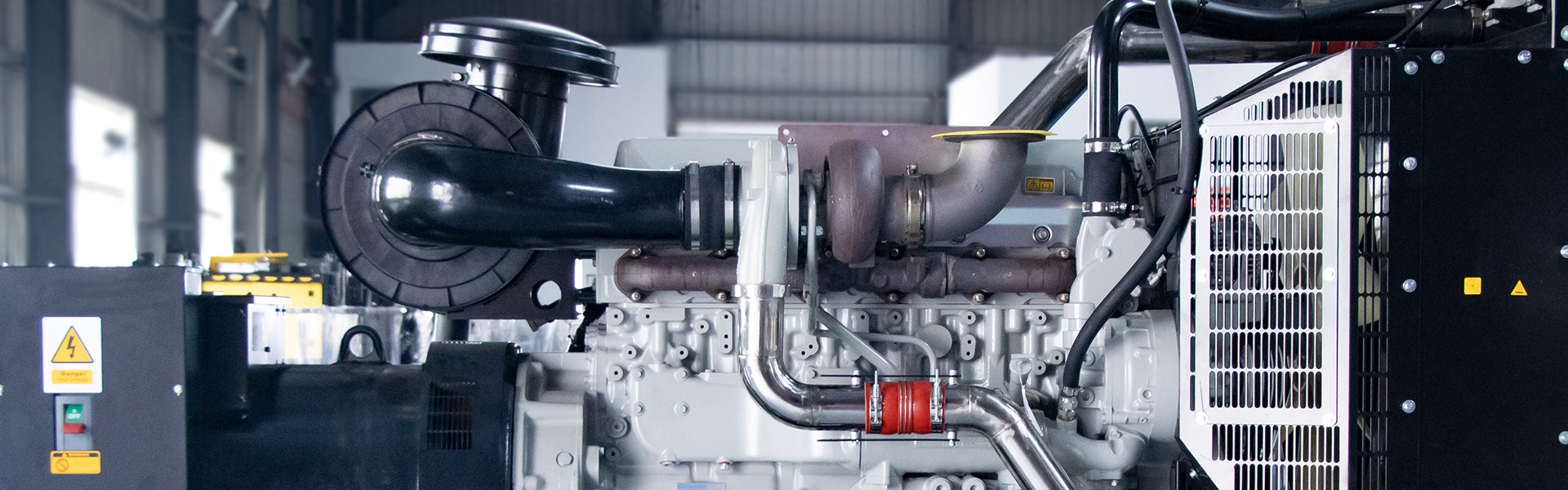
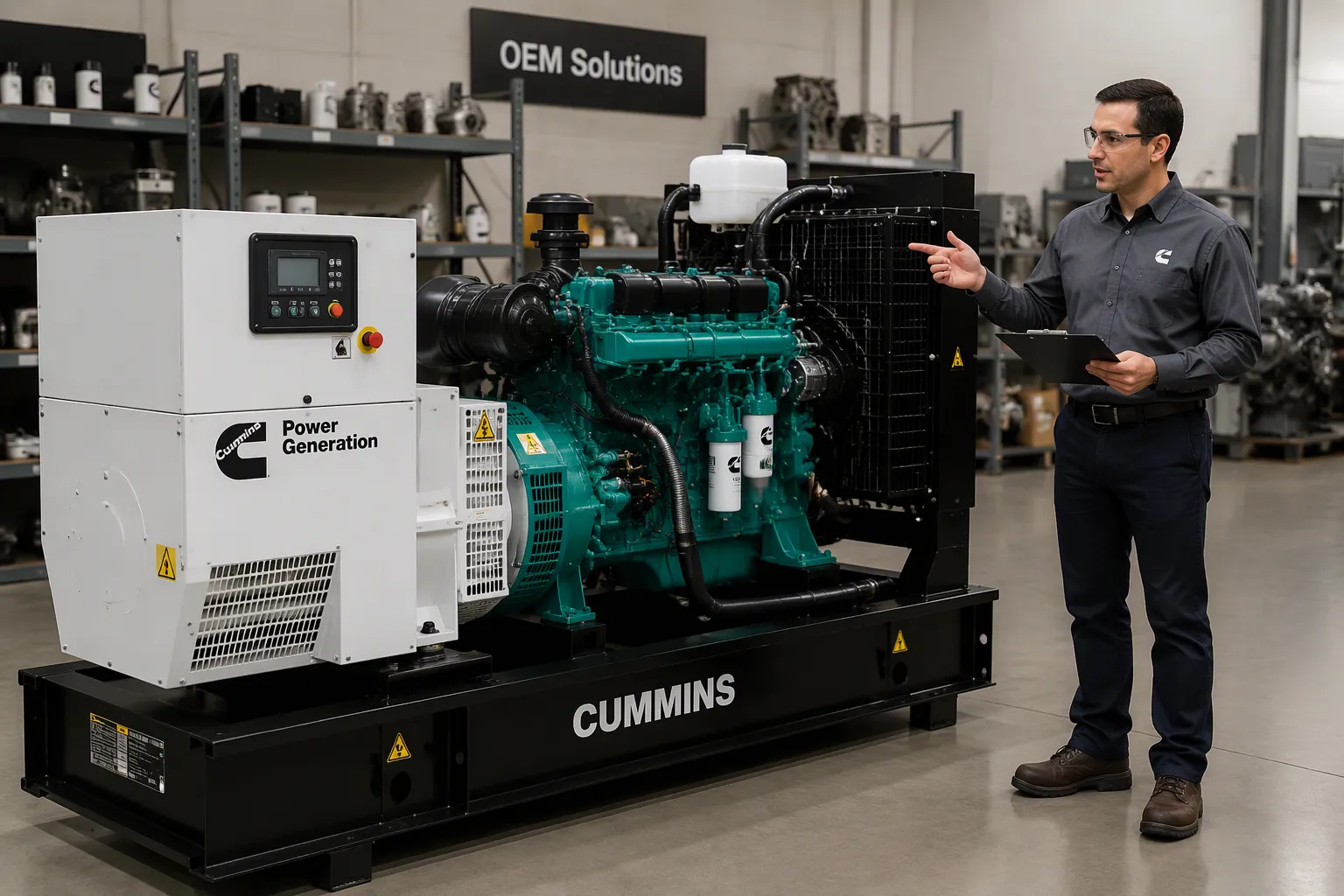
A Cummins generator supplier China delivers high-performance gensets built on genuine Cummins engines with flexible OEM options. These generators meet ISO and CE standards and serve construction, mining, healthcare, data centers, and backup power. Leading suppliers like Lehui combine Cummins engine quality with competitive pricing, customization, and responsive technical support. You can verify quality assurance and supplier credibility through certifications, factory audits, and reference checks.
Cummins generators from China deliver reliable power and last for many years.
These generators work in many industries, from construction to healthcare.
You can customize generators with OEM options to match your brand and needs.
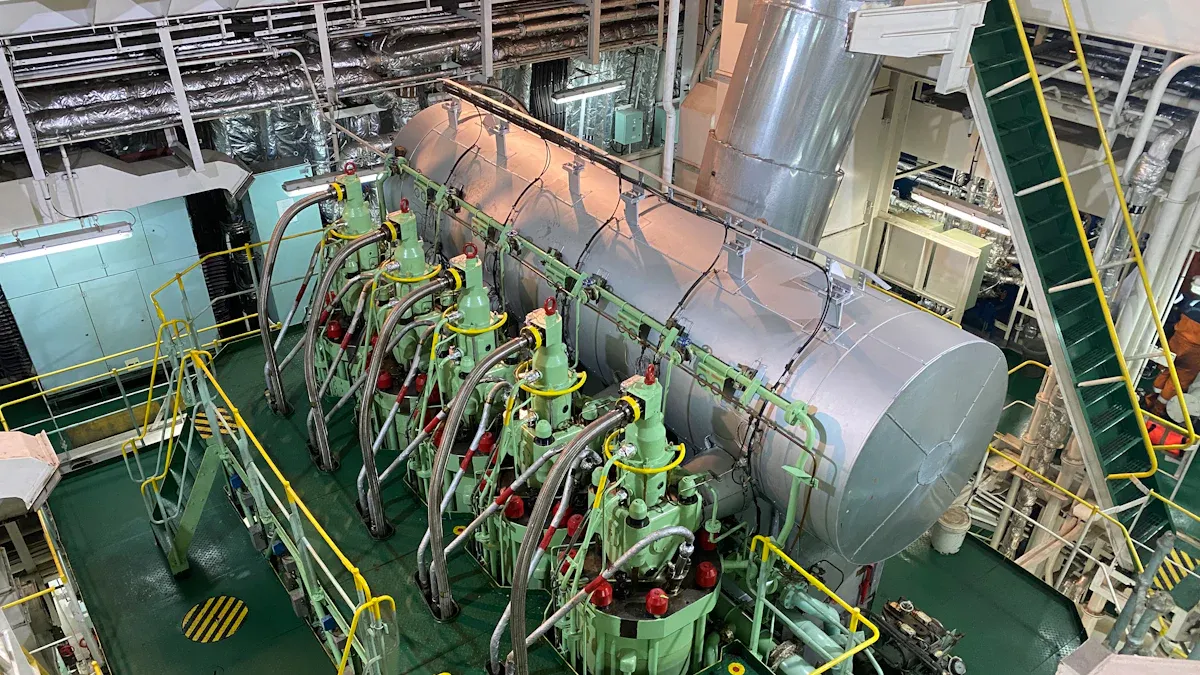
You want a generator that delivers steady power, burns fuel efficiently, and lasts for decades. Cummins engines from Chinese suppliers meet these demands through proven engineering and strict manufacturing controls. This section breaks down the performance data you need to evaluate before you buy.
A Cummins generator supplier China offers a wide power band, from small standby units to heavy industrial gensets. You can choose models spanning 17 kW to 2,690 kW (21 kVA to 3,360 kVA). This range covers nearly every commercial and industrial need.
|
Power Output (kW) |
Power Output (kVA) |
|---|---|
|
17 |
21 |
|
22 |
28 |
|
25 |
31 |
|
32 |
40 |
|
40 |
50 |
|
50 |
63 |
|
58 |
72 |
|
80 |
100 |
|
90 |
113 |
|
100 |
125 |
|
110 |
138 |
|
120 |
150 |
|
145 |
180 |
|
160 |
200 |
|
200 |
250 |
|
220 |
275 |
|
260 |
325 |
|
310 |
388 |
|
350 |
438 |
|
360 |
450 |
|
380 |
475 |
|
400 |
500 |
|
500 |
625 |
|
600 |
750 |
|
640 |
800 |
|
800 |
1000 |
|
1000 |
1250 |
|
1180 |
1475 |
|
1350 |
1688 |
|
1500 |
1875 |
|
1600 |
2000 |
|
1800 |
2250 |
|
2200 |
2750 |
|
2690 |
3360 |
Engine efficiency depends on the match between the engine model and the alternator. Chinese suppliers pair genuine Cummins engines with high-quality alternators to hit rated output consistently. Consider these common genset configurations:
|
Genset Model |
Power (kW) |
Power (kVA) |
Engine Model |
Engine Rated Power (kW) |
|---|---|---|---|---|
|
UC25GF |
20 |
25 |
4B3.9-G11 |
23 |
|
UC30GF |
24 |
30 |
4B3.9-G2 |
30 |
|
UC40GF |
32 |
40 |
4BT3.9-G2 |
40 |
|
UC60GF |
48 |
60 |
4BTA3.9-G2 |
60 |
|
UC75GF |
60 |
75 |
4BTA3.9-G11 |
80 |
|
UC100GF |
80 |
100 |
6BT5.9-G2 |
100 |
|
UC125GF |
100 |
125 |
6BT5.9-G2 |
115 |
|
UC135GF |
108 |
135 |
6BTA5.9-G2 |
120 |
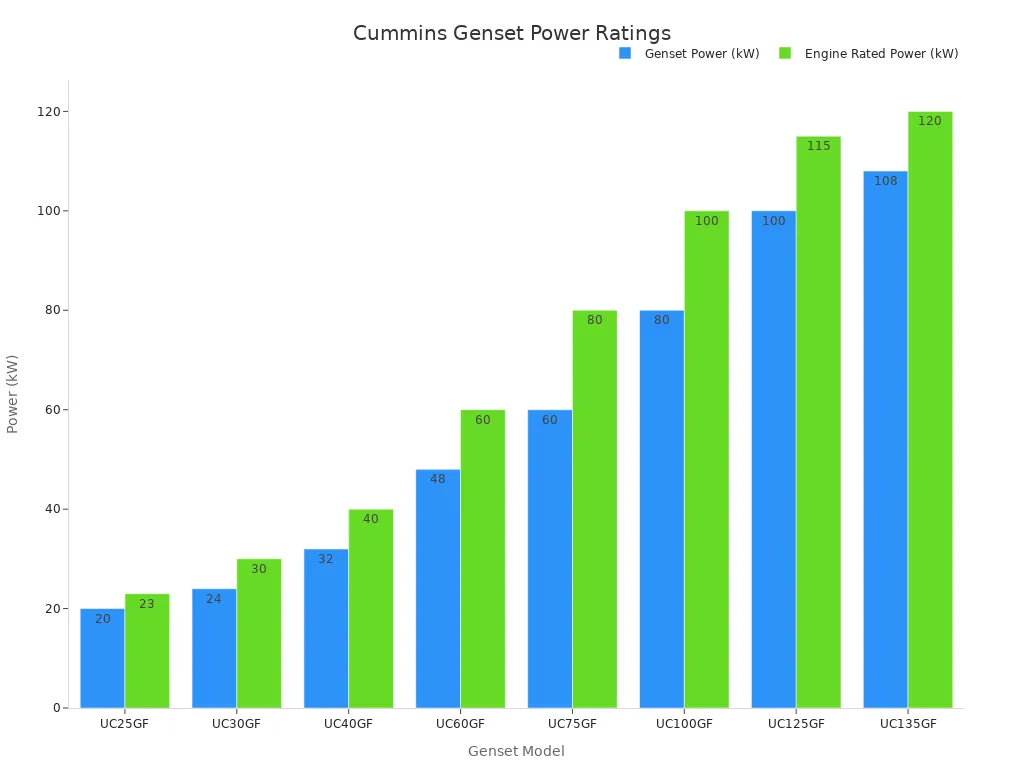
Notice that engine rated power typically exceeds genset output. This headroom protects the engine during transient loads and extends service life. Modern Cummins platforms also include fuel-saving innovations. Multi-fuel systems use low-carbon fuels and save 1.3% to 6% on diesel. The Multi-Fuel Powertrain 3.0 adds advanced control technology for real-time monitoring and efficiency gains.
Fuel cost dominates the total ownership cost of any generator. You should compare consumption figures at your target load before you commit. In the 500 kW class, a Cummins KT38-G engine (560 kW prime at 1500 RPM) consumes about 140 L/h. A Perkins unit in the same class burns 132 L/h, and an SDEC unit burns 138 L/h. Cummins sits slightly above these figures on paper. The engine compensates with superior durability and global parts support.
|
Aspect |
Cummins |
Perkins / Other Brands |
|---|---|---|
|
Durability |
Heavy-duty design, withstands challenging conditions and extreme workloads |
Robust construction, consistent performance, favored in material handling/construction |
|
Expected lifespan |
15,000–50,000 operating hours; >60,000 hours with meticulous maintenance |
Long service life in appropriate applications |
|
Standby lifespan |
20–30+ years |
Not specified |
|
Prime power lifespan |
10–15 years |
Not specified |
|
Global support |
Operates in 190+ countries; strong parts/service availability |
Solid support but less extensive international network |
|
Fuel efficiency |
Recognized for fuel efficiency and low emissions |
Optimized fuel consumption, often lower in specific models |
Durability separates Cummins from budget alternatives. A well-maintained Cummins genset runs for 15,000 to 50,000 hours. Meticulous maintenance pushes that figure past 60,000 hours. Standby units last 20 to 30+ years, and prime power units last 10 to 15 years. The mechanical fuel pump adapts to varied diesel quality, which matters in remote sites. Cummins also operates a service network across 190+ countries. You get parts and technician support almost anywhere.
Maintenance discipline protects these lifespan figures. Schedule a medium repair after six months of operation or at 1,000 cumulative working hours, whichever comes first. This interval preserves optimal performance and extends generator longevity. Keep a log of running hours and service dates. Your supplier can then recommend the right service schedule for your duty cycle.
Certification tells you whether a supplier builds to recognized standards. Chinese Cummins suppliers commonly hold a broad set of marks. These include ISO, CE, ATEX, ROHS, DNV, BV, Lloyd's Register, CSC, CCS, ISO 9001, QS 9000, and TS 16949. Each mark signals compliance with a specific domain. CE covers European safety requirements. ATEX and ROHS address hazardous-environment and environmental safety. ISO 9001, QS 9000, and TS 16949 cover quality management systems.
Factory-level certifications add further confidence. Cummins Power (China) Co., Ltd.'s Wuhan factory holds ISO 9001 (since 2009), ISO 14001 for environmental management, and OHSAS 18001 for safety. That plant produces generator sets, power boxes, ATS cabinets, and power distribution cabinets.
|
ISO Standard |
Scope / Relevance |
|---|---|
|
ISO 8528 |
Defines applications, ratings, performance, and characteristics of generator set components (engines, alternators, controls, switchgear); covers functional/acceptance tests including vibration and sound measurement; specifies 24-hour average power output at 70% of nameplate kW rating |
|
ISO 3046 |
Focuses on engine characteristics such as power ratings, fuel consumption, and vibration; conformance typically noted on generator set specification sheets |
|
ISO 9001 |
Establishes requirements for a quality management system (QMS) |
All generator sets conform to ISO 8528, CE directives EN 60204 / EN 12100 and AS 2789, with full certification documentation supplied. As an ISO 8528-certified manufacturer, the company powers its gensets with globally recognised engine brands including Cummins, fully compliant with ISO 3046 / BS 5514 engine standards, and all generator sets carry CE certification in accordance with EU directives EN 60204 and EN 12100.
You should verify compliance at the unit level, not just the company level. Reputable suppliers ship each genset with acceptance records. A 330 kVA Cummins genset (6LTAA9.5-G1 engine, 50 Hz, three-phase 400 V, PF 0.8) arrives ISO 8528 compliant with an IP23 H-class brushless alternator. Every 320 kVA silent unit leaves the factory ISO 8528-verified with full pre-shipment acceptance records. Load bank footage covers six duty-cycle stages from 0% to 110%, and a PDF output certificate confirms compliance. Documentation packages include 3D engineering assembly drawings, macro-photography of key components for parts authentication, and a PICC insurance-backed 5-year warranty citing the engine serial number. A 150-page field service reference in five languages, wiring diagrams, and testing meters complete the package.
Build quality supports these claims. Suppliers run NDT magnetic-particle flaw detection and pressure testing on every chassis. Enclosures finish to C3, C4, or C5 anti-corrosion class and pass 500 to 700 hours of salt-spray testing. CNAS-documented models comply with ISO 8528-5:2018, GB/T 2820.5-2009, ISO 3046, and ISO 12944. Units rate for ambient temperatures up to 50°C, with copper radiator options for hot climates. Ask your Cummins generator supplier China for these records before you sign a contract. The paperwork reveals whether the supplier controls quality or merely assembles parts.
Cummins generators from Chinese suppliers fit a wide range of industries. Each sector places different demands on a genset. You should match the unit's duty rating and configuration to your actual operating conditions.
Job sites rarely have stable grid access. You need a generator that survives dust, vibration, and temperature swings. Cummins-powered gensets handle these conditions through heavy-duty engine blocks and reinforced chassis. Suppliers offer skid-mounted and trailer-mounted units for fast relocation between sites. Corrosion-resistant enclosures rated to C3 or C5 protect the equipment in coastal and humid mining regions. Lehui configures these units with oversized radiators for ambient temperatures up to 50°C.
Hospitals and data centers cannot tolerate extended outages. NFPA 110 Level 1 requires generator startup in less than 10 seconds. UPS batteries bridge only the first few minutes of a blackout. A single un-commissioned generator can push downtime past the 99.995% availability threshold. Cummins gensets meet these demands through the PowerCommand® control system, which provides real-time monitoring and predictive maintenance alerts. Scheduled inspections, fluid analysis, and 24/7 global service support keep these units mission-ready.
Commercial buildings, retail chains, and office parks rely on standby power to protect operations during grid failures. Prime power units serve remote facilities with no utility connection at all. You can specify sound-attenuated enclosures for urban sites and automatic transfer switches for seamless switching. Lehui supports both duty types with custom control panels and remote monitoring options.
OEM partnerships extend far beyond buying a finished generator. You gain the ability to shape the product to your exact specifications, your brand, and your market requirements. A Cummins generator supplier China with genuine OEM capabilities gives you control over configuration, documentation, and after-sales support. This section explains what you should expect from a true manufacturing partner.
Private labeling transforms a standard genset into your branded product. You choose the enclosure color, the control panel layout, and the decals. You decide whether the unit carries your logo on the canopy, the control box, and the documentation. Suppliers with in-house fabrication capabilities handle these changes without delaying production.
Custom configurations go deeper than aesthetics. You can specify the alternator brand, the voltage regulator, and the control system. You can request a specific base frame design for your mounting footprint. You can select sound-attenuated canopies with noise levels measured to ISO 3744 standards. You can order trailers, fuel tanks, and automatic transfer switches as integrated packages.
|
Configuration Option |
What You Can Specify |
|---|---|
|
Engine |
Cummins model, power rating, fuel type (diesel, gas, multi-fuel) |
|
Alternator |
Brand (Stamford, Leroy-Somer, Mecc Alte), IP rating, insulation class |
|
Control System |
PowerCommand®, Deep Sea, ComAp, or custom PLC |
|
Enclosure |
Open skid, weatherproof canopy, sound-attenuated, anti-corrosion class |
|
Accessories |
Fuel tanks, trailers, ATS, paralleling switchgear, remote monitoring |
The engineering team at Lehui reviews your application data before recommending a configuration. They match the engine to the alternator, calculate the cooling requirements for your ambient temperature, and verify the voltage regulation at your load profile. You receive 3D engineering drawings for approval before production begins. This process eliminates surprises at delivery.
A reliable OEM partner provides support throughout the product lifecycle, not just at the point of sale. You need pre-sales engineering assistance to select the right model. You need post-sales documentation, commissioning support, and spare parts availability. You need a partner who responds when a problem arises.
Partnership models vary by supplier. Some offer simple distribution agreements. Others provide deeper collaboration, including joint product development, market-specific engineering, and shared inventory planning. You should evaluate which model fits your business strategy.
Distribution partnership: You buy finished units, apply your brand, and resell them. The supplier handles warranty and technical support.
Semi-OEM partnership: You specify key components and the supplier assembles to your drawings. You share responsibility for performance validation.
Full OEM partnership: You co-develop products with the supplier. You own the design intellectual property and the supplier manufactures to your specification.
Lehui operates a flexible partnership model. They assign a dedicated account manager and a technical engineer to each OEM client. You receive direct access to the factory floor for quality inspections. You get priority scheduling for urgent orders. You receive training materials and service documentation in your language. This structure supports long-term collaboration rather than one-off transactions.
Quality assurance separates a genuine OEM manufacturer from a parts assembler. You must verify that the supplier controls every stage of production, from engine sourcing to final load testing. A Cummins generator supplier China that passes your audit earns your trust. One that cannot show evidence deserves your caution.
Start with the certificate scope. A certificate means nothing if you cannot trace it to a standard. For example, CE certification for diesel generators under certificate M.2024.206.C101740 covers EN ISO 12100:2010, EN ISO 8528-13:2016, EN 60204-1:2018, EN 61000-6-2:2019, and EN 61000-6-4:2019. If the supplier cannot show the certificate number and its scope, treat the claim as unverified.
|
Standard / Check |
What It Verifies |
|---|---|
|
ISO 9001 |
Quality management system |
|
ISO 14001 |
Environmental controls |
|
ISO 45001 |
Occupational safety procedures |
|
ISO 8528 |
Generator set testing/performance |
|
ISO/IEC 17025 |
Calibration records from an accredited lab |
You should also confirm that certificates match your destination market. Verify their scope and validity rather than accepting them at face value. An on-site factory audit should confirm the engine assembly areas, automated winding equipment, controlled wiring stations, and a calibrated load bank. The audit should document full-load tests, voltage fluctuation checks, noise measurement, and fuel-consumption records for every unit.
Use these verification steps before you commit to a supplier:
Cross-reference the engine model number against the OEM catalog.
Request a factory load test report, not just a "CE certified" claim.
Confirm the noise rating methodology (e.g., ISO 3744) and the measurement distance.
Verify that a wiring diagram and service manual are provided before shipment.
Load acceptance evidence matters most. ISO 8528-10 defines load acceptance test procedures. NFPA 110 governs installation, maintenance, and periodic load bank testing for emergency and standby systems. In-house load bank testing provides measured evidence of real behavior. You should also check the site-condition envelope. Rated power differs from available power at every site. The supplier must state the temperature and altitude assumptions behind the rating.
Physical test capacity is another critical factor. Confirm the factory can load-test large units in-house. Multiple testing stations, high-capacity genset testing, and sufficient lifting capacity prove the stated parameters. A supplier without this capacity cannot validate performance claims.
Lehui operates multiple testing stations with high-capacity load banks. Every genset undergoes a full-load test before shipment. The test report records voltage, frequency, fuel consumption, and noise levels. You receive this report with the unit. You also receive a PICC insurance-backed 5-year warranty citing the engine serial number. This documentation package includes 3D engineering drawings, macro-photography of key components for parts authentication, and a 150-page field service reference in five languages.
The factory holds ISO 9001, ISO 14001, and ISO 45001 certifications. The production line uses automated winding equipment and controlled wiring stations. Each chassis passes NDT magnetic-particle flaw detection and pressure testing. Enclosures finish to C3, C4, or C5 anti-corrosion class and pass 500 to 700 hours of salt-spray testing. These controls ensure consistent quality across every unit.
Your due diligence protects your investment. Read the certificate scope, verify the load acceptance evidence, check the site-condition envelope, and confirm physical test capacity. A supplier who passes these checks, like Lehui, becomes a long-term asset for your power needs.
A Cummins generator supplier China delivers proven engine performance, broad application coverage, and flexible OEM solutions. Lehui exemplifies this balance: genuine Cummins power at competitive cost, with customization and support that rival traditional suppliers. Vet any supplier through certifications, factory audits, and reference checks before you commit. The right Chinese Cummins partner becomes a long-term asset for reliable power.
Check ISO 9001 and CE certificates, request factory audit reports, and confirm engine serial numbers against the Cummins catalog. Ask for load test records before you sign.
Yes. You can specify alternator brand, control system, enclosure type, and private labeling. Lehui provides 3D drawings for approval before production begins.
Look for multi-year warranties backed by insurance and engine serial numbers. Lehui offers a 5-year PICC-backed warranty plus multilingual service documentation and dedicated account engineers.
 NO.2 XIAHE ROAD GANZHE STREET,MINHOU COUNTY,FUZHOU FUJIAN CHINA
Please read on, stay posted, subscribe, and we welcome you to tell us what you think.


Copyright @ 2026 LEHUI (FUZHOU) INTELLIGENT EQUIPMENT MANUFACTURING CO., LTD All Rights Reserved.
 Network Supported
 English
 français
 Deutsch
 italiano
 русский
 español
 português
 العربية
 Melayu
 Indonesia

