
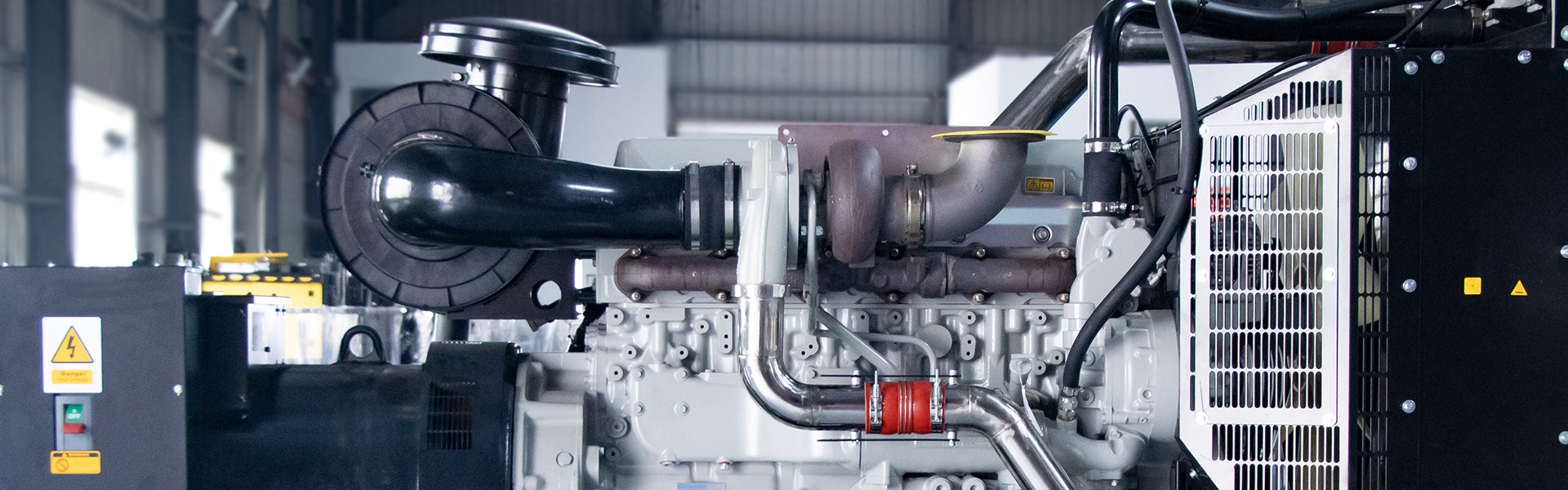
Data centers cannot afford prolonged power interruptions. Even a brief utility outage can disrupt servers, storage systems, network equipment, cooling infrastructure, and critical business applications. As data center power demand grows and operating costs become more difficult to control, facility operators are evaluating backup power architectures that combine diesel generators with battery energy storage systems (BESS).
A diesel generator and battery hybrid system for data centers combines the long-duration backup capability of diesel generation with the fast response, energy buffering, and load management capabilities of battery storage. When properly engineered, the two technologies can work together to improve power continuity, manage transient loads, reduce unnecessary generator operation, and support more flexible energy management.
For data center owners, EPC contractors, facility managers, and power system integrators, the key question is not simply whether to add batteries to a diesel generator. It is how to design a hybrid backup power architecture that meets the facility's critical load, redundancy requirements, runtime objectives, and operating strategy.
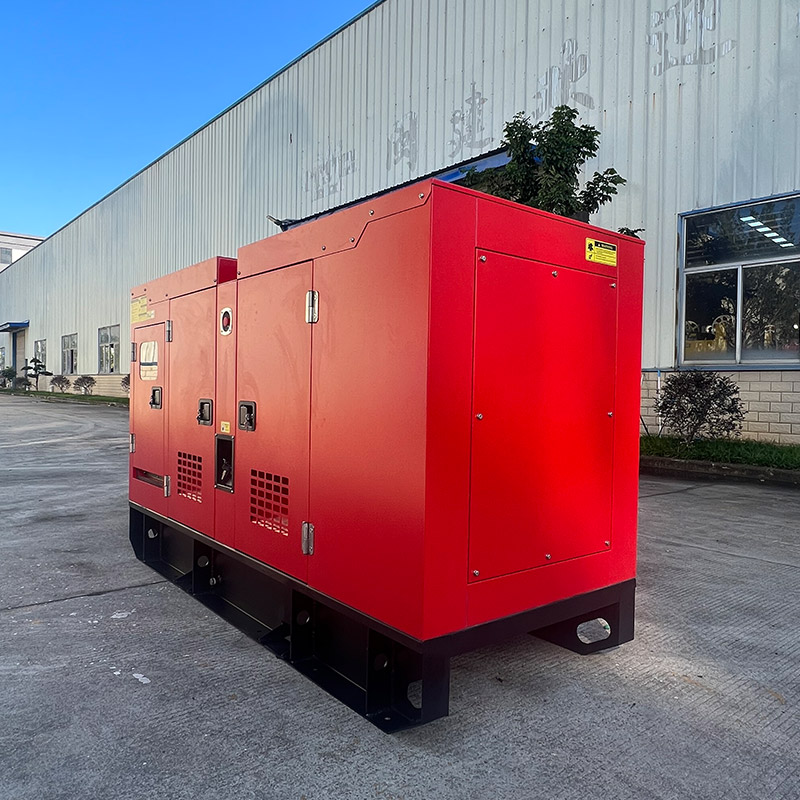
Industrial diesel generator sets provide backup power for critical facilities when utility supply is unavailable.
Traditional data center backup systems commonly use utility power, UPS equipment, batteries, standby diesel generators, and automatic transfer or switchgear systems. Each component serves a different purpose in maintaining power continuity.
Battery energy storage adds another layer of flexibility. Depending on system design, it can respond quickly to load changes, support short-duration power requirements, help manage generator operating conditions, and potentially reduce generator runtime during selected operating scenarios.
Data center operators may consider a diesel-generator-plus-battery hybrid architecture for several reasons:
The actual benefits depend on the data center's load profile, electrical design, control strategy, battery capacity, generator rating, and operating conditions. A hybrid system should be evaluated as an integrated power architecture rather than a collection of independent products.
A data center hybrid backup system generally combines a diesel generator, battery energy storage system, power conversion system (PCS), energy management system (EMS), switchgear, protection equipment, and the facility's existing UPS infrastructure where applicable.
The battery system can respond to power demand through its inverter, while the diesel generator provides sustained power for longer outages. The EMS coordinates operating modes, charging and discharging, generator dispatch, and system status according to the design requirements.
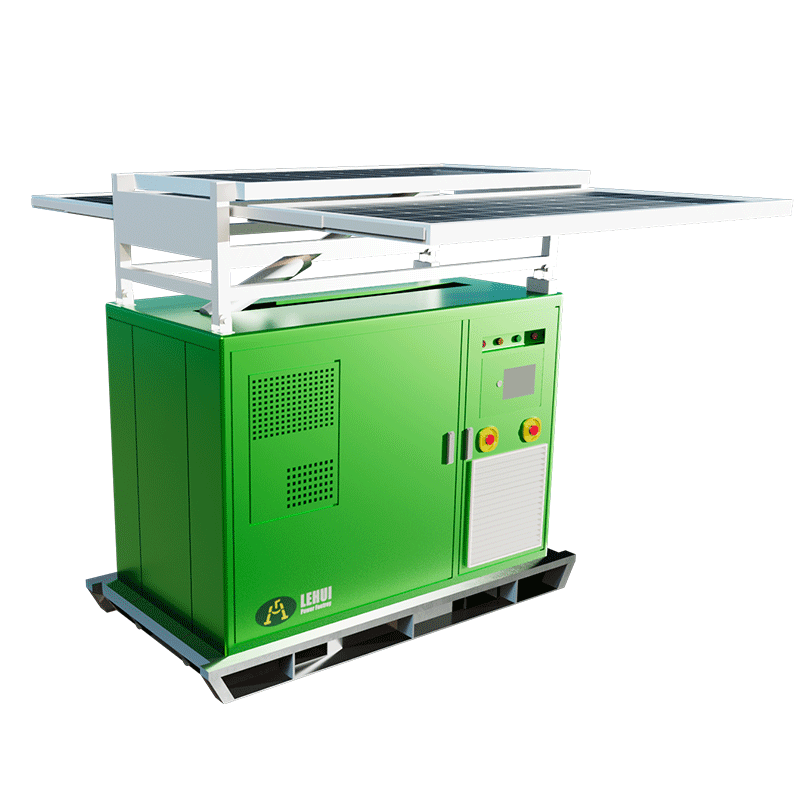
Hybrid power equipment integrates energy storage, power conversion, and generator operation according to the project configuration.
A simplified operating sequence may look like this:
Not every hybrid installation uses the same sequence. Data center projects may require different configurations depending on UPS topology, generator paralleling, redundancy, maintenance bypass, and the facility's power quality requirements.
Diesel generators remain a major backup power option for data centers because they can deliver sustained electrical output during extended utility outages when fuel supply and maintenance arrangements are properly planned.
For large facilities, generator selection must be based on the actual critical facility load rather than only the IT equipment nameplate total. Cooling systems, pumps, fans, auxiliary loads, power factor, starting characteristics, redundancy, and future expansion all influence the required generator capacity.
Data center generator selection should consider:
LEHUI supplies generator sets across a broad power range, with different engine and alternator configurations available for project requirements. For data center applications, the generator rating, control system, paralleling arrangement, and operating duty should be confirmed with the project engineering team.
Explore the diesel generator set product range to review generator options for industrial and backup power applications.
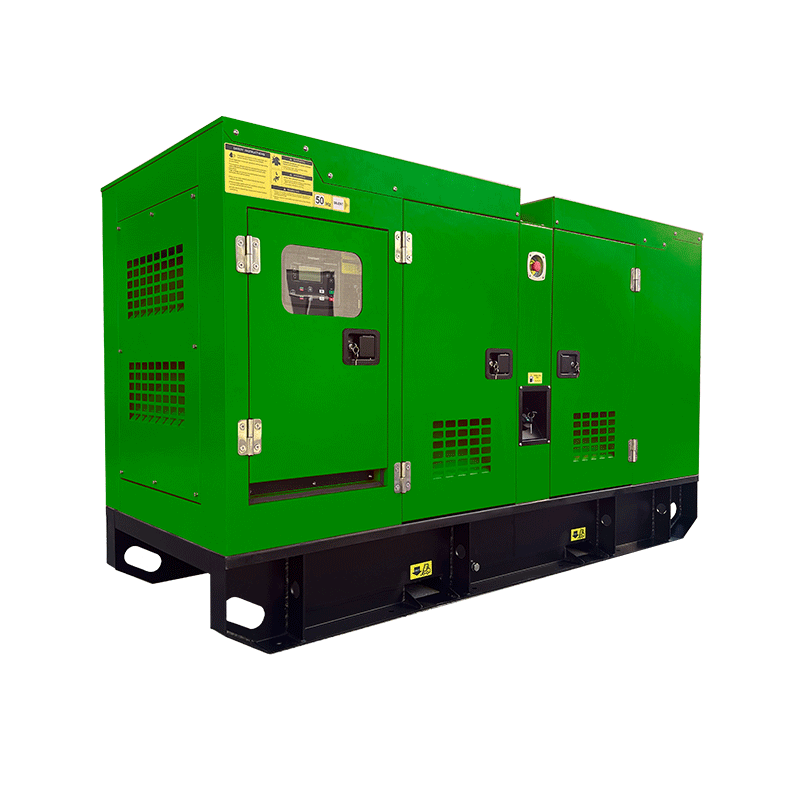
Enclosed diesel generator configuration for industrial backup power projects.
Battery energy storage can provide a different set of capabilities from diesel generation. The generator supplies sustained power over an extended outage, while the battery system can respond quickly and deliver energy for a defined duration based on its usable capacity.
For a data center hybrid backup system, the battery's role may include:
Battery power rating and energy capacity must be evaluated separately. A battery rated at 500 kW does not necessarily provide 500 kW for one hour unless the usable energy, inverter rating, operating limits, and system configuration support that duration.
Battery sizing should account for discharge duration, reserve state of charge, degradation over time, temperature, auxiliary consumption, power conversion losses, and the load profile that the system is expected to support.
LEHUI offers configurable battery energy storage products for hybrid power applications. Review the 100 kW battery energy storage system as a reference for the available BESS configuration and technical parameters, noting that a data center application requires project-specific engineering and validation.
Diesel generators and battery energy storage systems are not interchangeable. They serve different operating requirements, and a hybrid design uses their respective strengths according to the facility's power architecture.
| System Attribute | Diesel Generator | Battery Energy Storage |
|---|---|---|
| Energy source | Diesel fuel | Stored electrical energy |
| Response | Requires start and stabilization sequence | Fast inverter-based response within system limits |
| Outage duration | Potentially extended with adequate fuel and maintenance | Limited by usable energy and discharge rate |
| Power delivery | Sustained generation according to rating and operating conditions | Power and energy limited by battery and PCS ratings |
| Transient support | Limited by engine and generator transient performance | Can respond quickly if configured for the required transient |
| Maintenance | Engine, fuel, coolant, oil, battery, and generator maintenance | Battery health, HVAC, PCS, controls, and fire protection checks |
| Operating emissions | Produces exhaust emissions while operating | No direct exhaust emissions during discharge |
A hybrid system combines these technologies to support different stages of backup operation. The diesel generator provides sustained energy, while the battery can provide rapid response, energy buffering, and selected operational support.
Battery sizing begins with the operating objective. A battery designed to bridge a short generator-starting interval will have different energy requirements from a system intended to support peak shaving, generator load management, or extended ride-through.
Two fundamental values must be defined:
A simplified battery energy calculation is:
Required nominal battery energy (kWh) ≈ Required load (kW) × Backup duration (hours) ÷ usable discharge fraction ÷ system efficiency
This is a preliminary calculation only. Engineering design should account for battery degradation, reserve capacity, temperature, discharge limits, auxiliary loads, inverter efficiency, and the required operating state of charge.
For example, if a facility wants a battery to support a defined 500 kW load for 15 minutes, the energy delivered to that load is 125 kWh before accounting for losses and reserve requirements. The final battery capacity would be higher after applying the project-specific efficiency, usable state-of-charge range, and aging margin.
Battery power rating must also be checked against the load's peak demand and transient response. A high-energy battery may still be unsuitable if its PCS cannot deliver the required instantaneous power.
Adding a battery does not automatically allow a data center to reduce its generator capacity. The generator must still meet the load that it is required to support under the defined operating conditions and redundancy strategy.
Hybrid sizing should evaluate several operating scenarios:
For a data center, the hybrid design should not rely on the battery to compensate for an undersized generator unless that operating strategy has been specifically engineered, validated, and accepted by the facility's reliability requirements.
Generator ratings should also distinguish between standby, prime, and continuous operation. The appropriate rating depends on the expected duty, operating hours, load profile, manufacturer conditions, and applicable project standards.
The control system is what makes a diesel-generator-and-battery hybrid architecture operate as an integrated solution. The Energy Management System (EMS) coordinates operating modes, while the Power Conversion System (PCS) controls battery charging and discharging and manages its electrical interface.
For data center applications, the controls and protection design should address:
The control sequence should clearly define what happens if the battery PCS, EMS, generator controller, or communication network fails. A hybrid system must be designed so that a fault in one component does not create an unacceptable risk to the critical load.
LEHUI's hybrid power products include energy storage, power conversion, and local energy management configurations. For customized projects, the hybrid power supply solutions provide a starting point for discussing generator and battery combinations, while the final control architecture must be developed according to the data center's requirements.
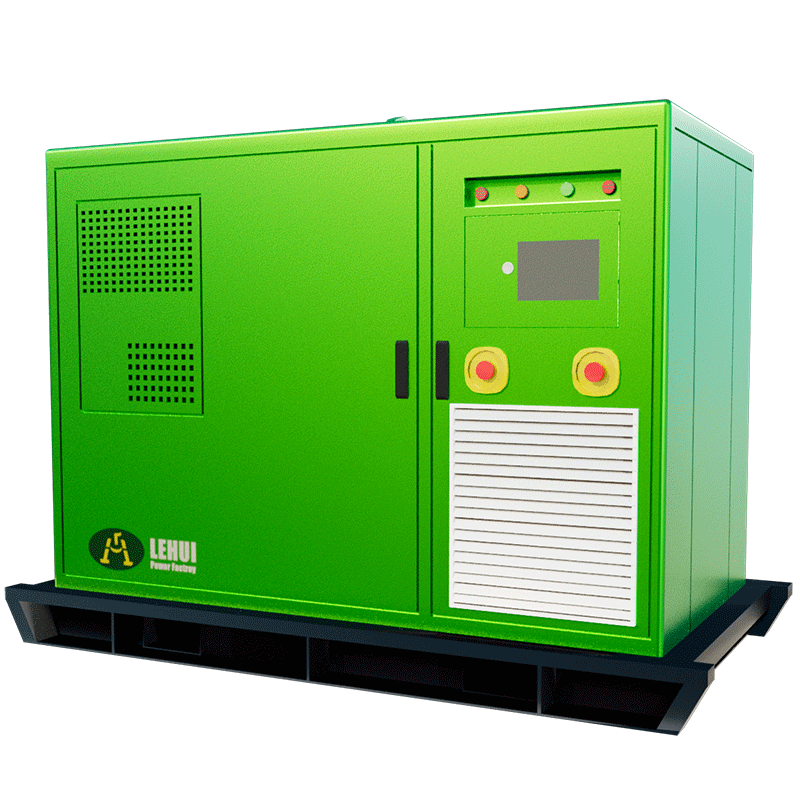
Battery energy storage equipment requires coordinated power conversion, thermal management, monitoring, and protection.
Hybrid backup power is not limited to a single facility type. The appropriate design depends on the size of the critical load, the availability of utility power, energy management objectives, and the required redundancy.
Enterprise facilities may use hybrid systems to support backup power coordination, selected energy management functions, and facility expansion. Existing UPS and generator infrastructure should be evaluated before introducing additional battery systems.
Colocation operators need to maintain power continuity for multiple tenants with different service-level requirements. Hybrid system design must account for load segregation, redundancy, maintenance access, and the facility's approved electrical architecture.
Edge facilities may be located in areas where utility reliability, maintenance access, or space availability presents additional challenges. A properly configured hybrid system can provide operational flexibility, but fuel logistics and battery maintenance must remain part of the site plan.
AI workloads can create substantial power demand and rapid load changes. Hybrid backup power designs should evaluate the facility's actual load profile, power excursions, cooling response, UPS performance, generator transient characteristics, and battery PCS capability rather than relying on average load figures alone.
Data center hybrid power projects involve multiple equipment types and operating requirements. Choosing a supplier should involve more than reviewing a product brochure or comparing battery capacity and generator output.
Before requesting a quotation, prepare the following project information:
| Project Information | Details to Confirm |
|---|---|
| Critical load | Total kW, kVA, power factor, load profile, and load growth |
| Backup duration | Required runtime for battery and generator under defined operating scenarios |
| Redundancy | N, N+1, 2N, or other reliability architecture |
| Generator | Power rating, duty rating, engine, alternator, controller, fuel system, and enclosure |
| Battery | Chemistry, kW, kWh, usable capacity, operating temperature, and lifecycle assumptions |
| PCS and EMS | Inverter rating, controls, communication, dispatch strategy, and protection interfaces |
| Site conditions | Temperature, altitude, space, ventilation, noise, access, and installation requirements |
| Compliance | Applicable electrical, fire, environmental, and data center standards |
| Testing and commissioning | Factory acceptance tests, load tests, integration tests, failure scenarios, and documentation |
A qualified supplier should be able to discuss generator sizing, battery capacity, power conversion, system controls, equipment interfaces, testing requirements, and project-specific customization rather than recommending a standard product without understanding the load.
Data center backup power is a mission-critical application. A hybrid configuration that works well for a construction site, remote microgrid, or commercial facility may not automatically meet the requirements of a data center.
Before deployment, the project engineering team should verify:
For data centers, reliability depends on the complete system. Generator, battery, UPS, switchgear, controls, cooling, protection, and maintenance strategy must work together under normal conditions, utility failure, equipment fault, and recovery scenarios.
LEHUI provides generator sets, battery energy storage systems, hybrid power solutions, and customized equipment for industrial and emergency power projects. For a data center project, its engineering team can review the required generator capacity, battery power and energy, operating modes, and equipment configuration to determine whether a customized hybrid solution is appropriate.
Visit LEHUI Power Factory to discuss your backup power requirements, including critical load, runtime, redundancy, site conditions, and integration needs.
It is a backup or energy management architecture that combines diesel generation with battery energy storage, power conversion, and controls. The generator provides sustained power, while the battery supports fast response and defined energy or power functions according to the system design.
Combining diesel generation and battery storage can provide operational flexibility. Batteries can respond rapidly to power changes and support selected load transitions, while diesel generators provide sustained backup energy during extended outages. The benefits depend on the load profile and control configuration.
Not automatically. A BESS may provide fast response or backup functions, but it does not necessarily replace the data center UPS. The system must be engineered to meet the required power continuity, voltage regulation, transfer behavior, redundancy, and critical load protection requirements.
Battery runtime depends on usable energy capacity, load demand, discharge limits, system efficiency, reserve state of charge, and temperature. Runtime should be calculated using the actual load and usable battery capacity rather than the nominal battery rating alone.
It may reduce fuel consumption under selected operating strategies, such as reducing unnecessary generator runtime or managing certain low-load conditions. Actual savings depend on the load profile, battery dispatch strategy, generator operating efficiency, and system configuration. Project-specific analysis is required to quantify savings.
Battery sizing requires both power and energy calculations. Determine the required kW output, support duration, usable state-of-charge range, efficiency, reserve capacity, degradation allowance, and the load scenarios the battery must support. The PCS rating must also meet the required power and transient response.
The EMS coordinates generator dispatch, battery charging and discharging, operating modes, power allocation, alarms, and monitoring according to the system design. Its control strategy must be coordinated with generator controllers, PCS equipment, switchgear, UPS, and facility protection systems.
They can be considered for AI data center applications, but the system must be evaluated against high-density loads, rapid load changes, cooling demand, generator transient response, UPS topology, battery PCS capability, redundancy, and the facility's power quality requirements.
Provide the critical load in kW and kVA, power factor, required backup duration, redundancy arrangement, generator rating, battery power and energy requirements, site conditions, operating modes, existing UPS or switchgear information, applicable standards, and project schedule.
 NO.2 XIAHE ROAD GANZHE STREET,MINHOU COUNTY,FUZHOU FUJIAN CHINA
Please read on, stay posted, subscribe, and we welcome you to tell us what you think.


Copyright @ 2026 LEHUI (FUZHOU) INTELLIGENT EQUIPMENT MANUFACTURING CO., LTD All Rights Reserved.
 Network Supported
 English
 français
 Deutsch
 italiano
 русский
 español
 português
 العربية
 Melayu
 Indonesia

