
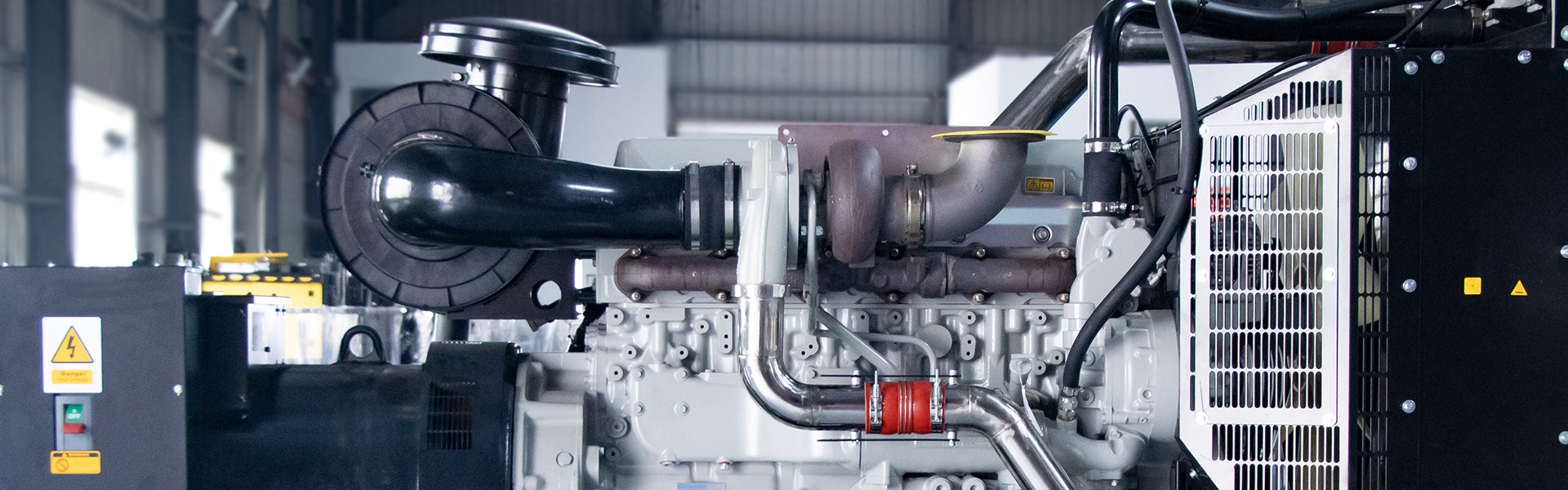
Buying a diesel generator from China can offer international buyers competitive pricing, a wide choice of engine brands, flexible configurations, and access to manufacturers with export experience. However, a quotation, product catalog, or factory video alone cannot confirm whether a supplier has the production capability and quality control required for a reliable order.
A factory inspection gives buyers the opportunity to verify the actual manufacturing process, component sourcing, assembly quality, testing equipment, documentation, and export preparation before placing a large order or releasing final payment.
For international buyers sourcing diesel generator sets from China, the most effective factory inspection is not simply a tour of the workshop. It should follow a clear checklist, verify important claims with evidence, and connect the inspection findings with the specifications written in the purchase order.
This guide explains how to inspect a diesel generator factory in China, what to check at each production stage, which questions to ask the supplier, and how to prepare a practical factory audit checklist before visiting.

Generator suppliers may have similar product catalogs and specifications, but their manufacturing capabilities, quality control procedures, component sourcing, and after-sales support can differ considerably.
A factory inspection helps buyers determine whether the supplier can consistently deliver the generator configuration promised in the quotation. It also helps identify potential problems before they become expensive issues during production, shipping, installation, or commissioning.
During a factory visit, buyers can verify:
For buyers sourcing equipment from a diesel generator manufacturer in China, a well-planned inspection is an important part of supplier qualification and purchasing risk management.
Start the inspection before entering the production workshop. Confirm the supplier's registered company name, business license, factory address, manufacturing scope, export experience, and relevant certifications.
International buyers should distinguish between a manufacturer, an assembly facility, and a trading company. A trading company may still provide a legitimate sourcing service, but buyers should understand who actually manufactures the generator, who performs testing, and who is responsible for warranty claims.
| Inspection Item | What Buyers Should Verify | Evidence to Request |
|---|---|---|
| Business registration | Company name and registered business scope | Business license and company records |
| Factory location | Actual production location and facility ownership or use | Factory address, site visit, video walkthrough |
| Manufacturing capability | Assembly, wiring, enclosure production, testing, or outsourced processes | Production equipment and process records |
| Certifications | Certificate validity, scope, and issuing organization | Current certificate copies and verification records |
| Export experience | Previous shipments to relevant markets | Redacted shipping records, references, project examples |
Do not rely only on certificates displayed on the office wall. Check whether the company name, address, scope, and validity period match the supplier you are purchasing from. Where applicable, verify certificates through the issuing organization.
LEHUI provides information about its manufacturing background, generator product range, technical team, and company capabilities on its company profile and manufacturer information page. Buyers can use these details as a starting point when preparing supplier verification questions.
A factory inspection should include the actual production area rather than only the showroom, office, or finished-product display. Observe how generators move through assembly, wiring, inspection, testing, and packaging.
A well-organized production workshop should have clearly defined work areas, suitable tools, orderly component storage, and procedures for identifying products at different production stages.
Check the following during the workshop walkthrough:
Ask the production manager to explain the assembly process for the exact generator model you intend to purchase. This is more useful than simply viewing a general production line.

For example, when inspecting an industrial diesel generator, buyers should understand how the engine, alternator, base frame, vibration isolators, radiator, control panel, fuel system, and enclosure are assembled into the final unit.
The engine and alternator are two of the most important components of a diesel generator. Their specifications directly influence power output, performance, fuel consumption, maintenance requirements, and long-term reliability.
During inspection, verify that the component brands and model numbers match the quotation, technical agreement, and purchase order.
| Component | Inspection Points |
|---|---|
| Diesel engine | Brand, model, serial number, rated power, emissions requirements, authenticity and documentation |
| Alternator | Brand, model, rated output, voltage, frequency, insulation class, protection rating |
| Generator controller | Model, operating functions, alarms, shutdown protections, monitoring capabilities |
| Cooling system | Radiator capacity, fan, coolant connections, airflow design |
| Fuel system | Fuel lines, tank capacity, leak checks, filtration, fuel connections |
| Base frame | Welding quality, structural condition, mounting points, vibration isolation |
| Electrical system | Cable quality, terminals, circuit breakers, grounding, labeling and protection |
Buyers should not accept a different engine or alternator model without written approval. Even if the replacement appears similar, its performance, maintenance requirements, certification status, or spare parts availability may differ.
For projects requiring specific engine brands, LEHUI's Cummins-powered generator range provides a reference for comparing engine configurations and generator models.
Quality control should be visible and documented. A factory may have experienced technicians, but international buyers also need evidence that inspection procedures are consistently applied and that problems can be identified and corrected.
Ask the quality control team how inspections are performed during incoming component inspection, assembly, wiring, final testing, and packaging.
Important QC records may include:
Ask how a defective component is handled, who approves rework, and how the factory confirms that the problem has been resolved before the unit proceeds to the next stage.
A useful inspection is not simply a question of whether a QC department exists. Buyers should confirm what is checked, how the results are recorded, and whether those records can be connected to the generator being purchased.
Factory acceptance testing is one of the most important parts of a diesel generator inspection. A load test verifies the generator's operation under electrical demand and provides an opportunity to observe output performance, alarms, operating conditions, and abnormal behavior.
For international buyers, the test should be conducted on the actual unit or clearly identified equipment covered by the inspection agreement. The generator model and serial number should be recorded in the test report.
Depending on the generator specifications and contract requirements, the inspection may include:
| Test Item | What to Observe |
|---|---|
| No-load operation | Startup, idle stability, abnormal noise, leaks, and basic operating conditions |
| Load testing | Performance at agreed load points, such as 25%, 50%, 75%, and 100%, where applicable |
| Voltage and frequency | Output stability and compliance with the agreed operating specifications |
| Temperature and cooling | Operating temperature, coolant condition, airflow, and overheating alarms |
| Protection functions | Relevant alarm and shutdown functions, according to the agreed test plan |
| Leak inspection | Oil, fuel, coolant, and other visible leakage during and after operation |
| Final test report | Test date, generator serial number, measured data, test conditions, and inspector approval |
The exact test procedure should be agreed before the inspection and should follow the generator's applicable standards, manufacturer's recommendations, and contract requirements. Not every generator requires the same test sequence or load points.
Buyers should also ask whether the factory's load bank and measurement instruments are suitable for the generator capacity and whether calibration records are available where required.

A test report without identifiable equipment, test conditions, or measured values is less useful than a documented report tied to the unit's serial number. If buyers cannot attend in person, a live video inspection with clear views of the nameplate, test equipment, readings, and test process can provide additional verification.
The enclosure and base frame affect the generator's protection, appearance, transport durability, noise control, and installation requirements. These components should be inspected before the generator is packed.
For an enclosed or silent generator, check:
For generators intended for coastal locations, humid climates, or outdoor installations, buyers should discuss corrosion protection and enclosure specifications before production. The appropriate coating system depends on the environment and project requirements.
Visual appearance is important, but it should not replace checks of the enclosure design, cooling airflow, service access, and electrical protection.
International generator buyers may need specific documentation depending on the destination country, project, industry, and generator application. Certification requirements should be confirmed before ordering rather than after the equipment has been manufactured.
During the factory inspection, request and review the documents relevant to the project:
| Document | Purpose |
|---|---|
| Generator technical datasheet | Confirms model, power ratings, voltage, frequency, and configuration |
| Engine and alternator specifications | Verifies major components and technical characteristics |
| Factory test report | Records the actual unit's inspection and testing results |
| Certificate of conformity, where required | Supports compliance with relevant market or project requirements |
| Warranty document | Defines warranty coverage, exclusions, claim procedure, and responsibilities |
| Operation and maintenance manual | Provides installation, operation, maintenance, and troubleshooting guidance |
| Spare parts list | Supports maintenance planning and future parts procurement |
Do not assume that one certification automatically satisfies every destination market. Ask the supplier to identify the applicable standards and provide the corresponding documents for the exact generator model and configuration.
After the generator passes inspection, packaging becomes the next important step. Export shipments may experience container handling, port storage, vibration, humidity, and long-distance transportation. Packaging should be suitable for the shipping method and destination conditions.
Inspect the following before approving shipment:
Request photos of the finished generator, packaging, shipping marks, and container loading before shipment. These records help buyers confirm the condition and configuration of the goods before they leave the factory.
The following checklist can be used during an on-site visit, remote factory audit, or pre-shipment inspection. Buyers can adapt it according to the generator capacity, order quantity, destination market, and contract requirements.
| Inspection Category | Checklist | Status |
|---|---|---|
| Company verification | Business license, company name, factory address, export experience | Pass / Fail / N/A |
| Production capability | Assembly area, equipment, production flow, capacity, personnel | Pass / Fail / N/A |
| Component verification | Engine, alternator, controller, major components match the order | Pass / Fail / N/A |
| Assembly quality | Wiring, fastening, mounting, routing, workmanship | Pass / Fail / N/A |
| Quality control | Inspection procedures, records, traceability, corrective actions | Pass / Fail / N/A |
| Performance testing | Load test, output measurements, alarms, protection, test report | Pass / Fail / N/A |
| Enclosure and finish | Welding, painting, doors, cooling airflow, protection, lifting points | Pass / Fail / N/A |
| Documentation | Datasheets, certifications, manuals, warranty, test reports | Pass / Fail / N/A |
| Packaging | Protection, accessories, labels, packing list, loading records | Pass / Fail / N/A |
| After-sales service | Warranty process, spare parts, service response, technical support | Pass / Fail / N/A |
For a large order, buyers should document each inspection item with photographs, test records, responsible personnel, and corrective action deadlines. Any non-conformity should be resolved before final acceptance or shipment approval, according to the agreed contract.
Some warning signs may not immediately prove that a supplier is unreliable, but they deserve further verification before a purchase decision.
International buyers should evaluate these findings together rather than making decisions based on one issue alone. A clear explanation supported by documentation is different from an unexplained refusal to provide evidence.
LEHUI (Fuzhou) Intelligent Equipment Manufacturing Co., Ltd. supplies diesel generator sets, mobile light towers, hybrid power systems, and customized power equipment for industrial, commercial, construction, mining, and emergency applications.
For international buyers, evaluating the supplier involves checking product specifications, manufacturing capability, quality control, test procedures, documentation, and export arrangements—not simply comparing prices.
LEHUI's generator product range covers different power requirements and engine configurations. Buyers can review available models, compare specifications, and discuss project-specific requirements before confirming an order.
For buyers who need a specific capacity, engine brand, voltage, frequency, enclosure, or operating environment, technical confirmation before production is essential. A factory inspection can help ensure the delivered unit matches the agreed configuration and project requirements.
LEHUI welcomes project inquiries from international buyers who need generator specifications, customized configurations, technical support, or export quotations.
What should international buyers inspect at a diesel generator factory in China?
Buyers should inspect company credentials, manufacturing capability, production processes, engine and alternator specifications, assembly quality, quality control records, generator load testing, certifications, packaging, and after-sales support.
How can I confirm whether a Chinese diesel generator supplier is a real manufacturer?
Check the business license, registered company information, factory address, manufacturing equipment, production processes, component sourcing, and actual assembly capability. A factory visit or live remote audit can help verify whether the supplier manufactures or assembles the generator.
Should I visit the generator factory before placing an order?
A factory visit is recommended for large, customized, or high-value orders. For smaller purchases, a remote audit, component verification, documented factory test, and independent pre-shipment inspection may provide additional assurance.
What tests should a diesel generator pass before shipment?
Testing should follow the agreed technical specification and applicable standards. Depending on the generator, it may include startup, load testing, voltage and frequency checks, temperature monitoring, alarm and protection checks, leak inspection, and a documented final test report.
What documents should I request during a factory inspection?
Request the business license, relevant certifications, generator datasheet, engine and alternator specifications, factory test report, operation and maintenance manual, warranty terms, spare parts list, and export or packaging documentation where applicable.
Can I inspect a diesel generator factory remotely?
Yes. A live video inspection can cover the production workshop, component nameplates, assembly process, test equipment, generator operation, test readings, packaging, and serial numbers. A remote inspection is more useful when conducted against a prepared checklist and supported by clear records.
How do I verify engine and alternator brands before purchasing?
Check the component nameplates, model numbers, serial numbers, supplier documents, and technical specifications. Ensure they match the purchase order and obtain written approval for any proposed substitution.
What are the most common warning signs during a generator factory audit?
Warning signs include inconsistent company information, unclear component specifications, missing inspection records, inability to demonstrate testing, unverifiable certificates, unexplained factory access restrictions, and payment details that do not match the contractual supplier.
Is a factory load test enough to guarantee generator quality?
No. A load test is an important performance check, but generator quality also depends on component authenticity, assembly workmanship, design suitability, protection functions, documentation, packaging, installation, and maintenance.
When should I arrange a pre-shipment inspection?
Arrange the inspection after production is completed and before shipment or final payment, according to the purchase contract. The inspection should confirm product quantity, specifications, workmanship, testing results, accessories, packaging, and any agreed acceptance criteria.
 NO.2 XIAHE ROAD GANZHE STREET,MINHOU COUNTY,FUZHOU FUJIAN CHINA
Please read on, stay posted, subscribe, and we welcome you to tell us what you think.


Copyright @ 2026 LEHUI (FUZHOU) INTELLIGENT EQUIPMENT MANUFACTURING CO., LTD All Rights Reserved.
 Network Supported
 English
 français
 Deutsch
 italiano
 русский
 español
 português
 العربية
 Melayu
 Indonesia

