Solar Light Tower vs Diesel Light Tower: Which One Is Better for Construction Projects?
Nov 11, 2026
Neither tower wins every job. Choose a diesel light tower when the job runs under three months, the site has dependable fuel delivery, and you need maximum output immediately. Choose a solar light tower when the project runs longer than about 18 months, the site sits near homes, schools or hospitals with noise and air-quality rules, or the build targets LEED or low-carbon goals. Most crews reach solar break-even within 18 to 36 months on fuel and maintenance savings. Match the tower to project duration, site conditions and compliance requirements — and on a large site, the strongest plan is often a mix of both.
Key Takeaways
Choose solar light towers for long projects, quiet sites, or green building goals. They cost more upfront but save money on fuel and maintenance over time.
Pick diesel light towers for short jobs, remote sites with fuel access, or when you need maximum power right away. They have a lower upfront price and refuel quickly.
Compare total cost over the whole project, not just the purchase price. Solar often pays for itself in 18 to 36 months through fuel savings.
Mix both across a fleet where it makes sense: diesel covers remote or high-load zones while solar lights the main work areas near occupied boundaries.
Side-by-Side Comparison at a Glance
You can see the big picture fastest when you line up the two tower types against the same criteria. The table below summarizes how solar and diesel light towers typically compare on cost, runtime, emissions, noise, and maintenance. Use it as a starting map, then dig into the detailed sections that follow.
Table 1. Solar light tower vs diesel light tower, criterion by criterion
Criteria
Solar Light Tower
Diesel Light Tower
Upfront cost
Roughly $4,900 to $15,500 depending on model and output
Around $10,700 for a comparable LED unit; budget Chinese units start far lower
Daily operating cost
Near zero; sunlight recharges the batteries
Fuel use of roughly 6 to 17 L per day for LED models
Runtime
About 8 to 20 hours per charge, depending on sunlight and battery depth of discharge; 3 to 5 nights of autonomy on well-sized banks
Over 200 hours of total runtime; refuel in minutes
Emissions
Zero exhaust emissions at the point of use
Produces exhaust emissions during every operating hour
Noise
Very quiet; no engine or generator
Louder; diesel generators sit toward the upper end of the 60 to 75 dB range
Maintenance
Occasional panel cleaning and battery checks
Oil changes, filter replacement, refueling, and engine servicing
Prices in this article are indicative ranges drawn from public listings and market data; final quotes vary by region, configuration and order volume. Treat them as planning numbers, then confirm with a quotation.
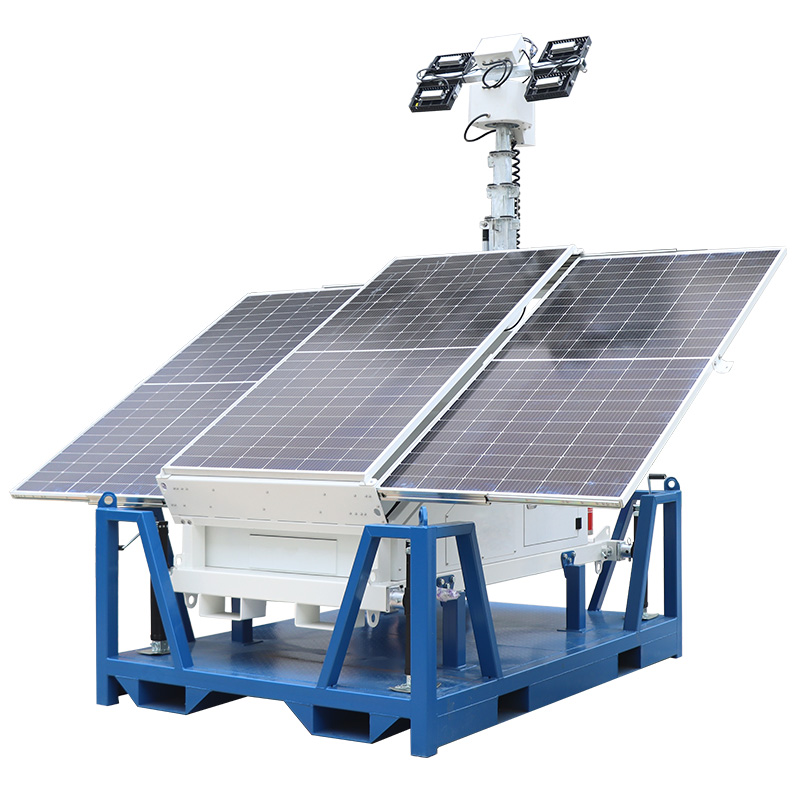
SLT-400 skid-mounted solar light tower — 400 W LED, lithium battery, up to 20 hours runtime. View the skid-mounted solar light tower.
Quick Verdict by Project Type
For a short-term project on a tight budget that needs intense illumination, a diesel tower remains a practical workhorse. Metal halide light towers in particular can still get the job done for short-term needs, even though they take time to warm up and use more fuel. Diesel towers also lead the market for high power output and reliability in remote areas with limited grid access. If your site has reliable fuel delivery and the job wraps in weeks rather than months, a manual diesel light tower keeps upfront spending low.
For long-term projects, quiet neighborhoods, and sustainability-focused builds, a solar light tower fits best. The solar segment is growing at the fastest rate in the light tower market, driven by environmental concerns, stricter emission regulations, minimal operational costs, and improving panel and battery performance. A solar tower also suits sites where noise complaints or air-quality rules limit generator use. Check local weather patterns first, because overcast conditions and winter months affect charging.
For a 30-month project using 10 towers, the math favors solar in a big way. A larger pole-based solar area lighting system carries an upfront purchase cost of about $267,200 with virtually no fuel or maintenance costs. A comparable diesel setup would total roughly $590,000 to $610,000 when rental, fuel, and maintenance are included. The solar option costs about half over the first project, and it saves even more on reuse.
A mixture of 6,000 lumen (SL-SAL-60L) and 10,000 lumen (SL-SAL-100L) area lights mounted on approximately 110 poles = Total investment of around $267,200.
Hybrid towers offer a middle path when grid power is partially available. They combine diesel and electric benefits, reduce fuel consumption, and add flexibility for night lighting. Dedicated hybrid power systems pair solar, battery storage and a generator set so the engine only runs when the battery bank is low. Match the tower type to your project duration, site conditions, and site goals, and you will get the most value from every unit on the job.
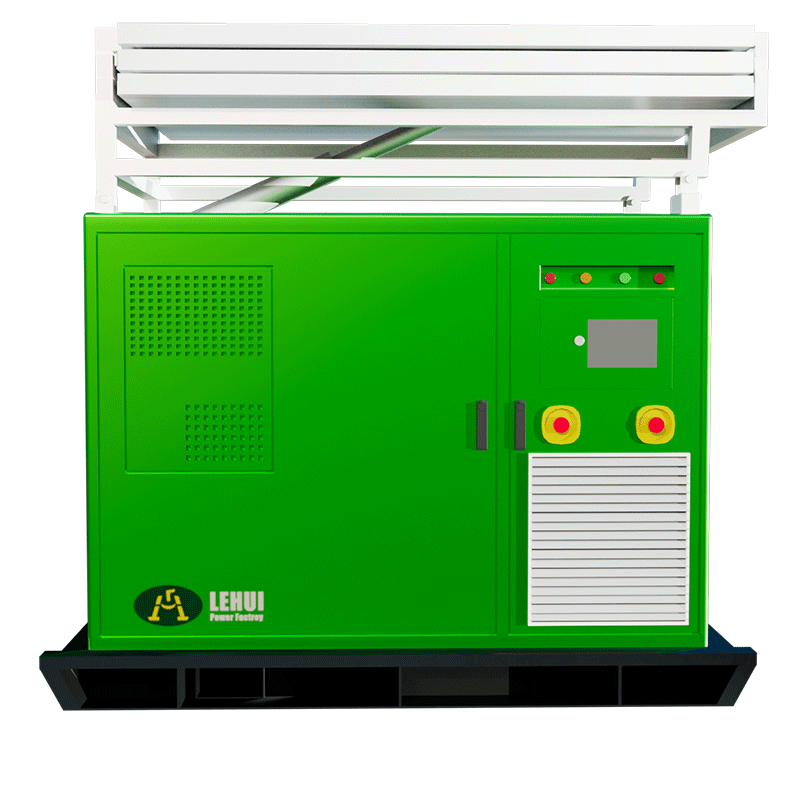
A 30 kW hybrid energy storage system combining PV, battery storage and a generator — the same logic applied at light tower scale.
Cost: Upfront Price vs Total Cost of Ownership
Which has the lower upfront cost?
Diesel light towers usually carry the lower sticker price, and the spread across the market is wide. Budget trailer-mounted LED units from Chinese suppliers start around $500 to $1,800, mainstream 6–20 kVA units such as Generac run $3,000 to $12,000, and heavy Cummins-powered models reach $20,000. Solar light towers typically start higher, with compact models around $4,900 and larger units reaching $15,500. You pay more on day one for solar, yet the upfront gap is only part of the story.
Fuel, recharging, and daily operating expenses
Diesel towers consume fuel every hour they run. An LED tower burns roughly 0.7 L per hour, while a metal halide unit uses about 2.5 L per hour. At 12 hours of nightly runtime, that means about 8.4 L for LED and 30 L for metal halide.
You can calculate daily fuel cost with a simple formula: fuel consumption per hour × hours used per day × diesel price. An LED tower at 0.7 L/hr × 12 hrs × $1.20/L costs about $10.08 per day. A metal halide tower at 2.5 L/hr × 12 hrs × $1.20/L costs about $36.00 per day. Solar towers recharge from sunlight and incur essentially zero fuel cost.
Total cost of ownership over project length
The longer the project, the more solar pulls ahead. Consider a five-year horizon. A diesel tower at $9,500 upfront adds $6,720–$8,900 in annual fuel, $1,500–$2,500 in refueling logistics, and $800–$1,200 in scheduled maintenance. That totals roughly $54,600–$72,500 over five years. A solar tower at $15,000 upfront adds only $150–$300 in annual maintenance, for a total near $15,750–$16,500. For fleet-scale purchases, a compact option such as the 600 W lithium battery solar light tower sits at the lower end of the solar price band and repeats that saving on every unit.
Solar typically breaks even in 18 to 36 months. Across a fleet, that gap compounds into hundreds of thousands of dollars in savings. Weigh total cost of ownership, not just the sticker price, before you commit.
Performance: Runtime, Lighting Quality and Reliability
How long can a solar light tower run without sunlight?
A well-sized solar light tower keeps working through several dark or cloudy days. Systems built with generous battery banks deliver three to five nights of autonomy. Low-angle winter light and diffused light from overcast skies still generate charge. Angled tempered-glass panels also shed snow on their own. Gel lead-acid batteries hold steady voltage down to -40°F and need no block heaters. With no engine, fuel pump, or injector, there is nothing to freeze in subzero weather.
Light output and coverage for night work
Modern LED fixtures produce 7,250 to 14,500 lumens while using up to 70% less energy than metal halide. One unit can illuminate 10,000 to 20,000 square feet. That coverage supports night work on most construction tasks. Diesel towers still deliver strong output, and high-wattage units suit wide-area floodlighting — a 12 m trailer-mounted LED floodlight tower is a typical choice for large open sites. Match fixture output to your task lighting plan, and check the photometric layout before you commit.
Reliability in heat, cold, and dusty conditions
Temperature extremes affect both tower types, and smart design manages the risk. Heat raises panel resistance and strains batteries, while cold slows battery chemistry. LEDs themselves perform well in cold, because lower ambient temperatures dissipate chip heat better.
Table 2. How temperature extremes affect solar light towers
Condition
Effect on Solar Light Towers
Extreme heat
Higher panel resistance lowers voltage output and slows charging; heat also accelerates battery reactions and shortens lifespan
Extreme cold
Cold reduces usable battery capacity and nighttime runtime; freeze-thaw ground movement can loosen mounts and tilt panels
Dust is the other reliability factor. An IP rating shows how well equipment resists dust and water ingress, so check it for harsh sites. Dust buildup can reduce diesel runtime, and regular cleaning keeps those units efficient. Solar towers need occasional panel and lens cleaning to hold output. Both options reward a simple preventive maintenance routine.
Environmental Impact: Emissions and Noise
Exhaust emissions and air quality on site
A solar light tower produces zero exhaust emissions at the point of use. You get cleaner air around work areas, staging zones, and site offices. A diesel light tower releases exhaust during every operating hour. On enclosed or partially enclosed sites, that exhaust can build up and affect air quality for your crew. You should plan ventilation and unit placement carefully when you run diesel units near occupied areas or air intakes. Where a site boundary sits close to homes or schools, a purpose-built solar trailer-mounted light tower — no fuel, zero emission — removes the problem at the source.
Noise levels and neighborhood impact
Noise rules often decide which tower you can use. Many cities tie construction hours to strict permits and require mitigation plans before work starts.
In New York City, construction is permitted on weekdays between 7am and 6pm; any work outside these hours, including weekends, requires after-hours authorization. Every construction or renovation project must develop a Construction Noise Mitigation Plan before work begins, and this plan must be confirmed in the Department of Buildings permit application.
Table 3. Examples of city noise rules affecting light tower choice
City
Noise Limit / Hours
Barrier & Permit Requirements
Los Angeles
Standard limit of 75 dB; off-hours work needs a noise variance permit
Temporary noise barriers required when limits are exceeded
San Francisco
Monday–Friday, 7am–8pm
Sound blankets mandatory within 300 feet of homes, schools, and hospitals
Supporting sustainability and green-building goals
Solar towers support LEED credits, low-carbon site targets, and corporate sustainability reporting. You cut fuel deliveries, spill risk, and on-site emissions in one move. Diesel still fits sites without green-building requirements or reliable sunlight.
SLT-600 trailer-mounted solar light tower — 3×435 W panels, 10.24 kWh battery, zero on-site emissions.
Maintenance and Uptime
Routine service needs for each option
A solar light tower needs little routine service. Perform a visual inspection every two to three months to confirm proper function and note any faults. Your crew should check the solar panels, battery system, charge controller, wiring, LED lights, mast, trailer components, tires, stabilizers, and weather seals. Keep panels clean and unobstructed, and follow the manufacturer's schedule for battery service.
A diesel light tower demands a heavier service load, shown in the table below.
Table 4. Typical diesel light tower service intervals
Interval
Maintenance Tasks
Every shift
Walkaround for leaks; check oil and coolant; test lamps
~250 hrs
Engine oil and filter change; air filter and belt check
~500 hrs
Fuel filter replacement; cooling system and lamp inspection
Monthly
Battery load test; fuel quality check; mast and cable visual
Annually
Full OEM service; coolant flush; trailer safety certification
Dusty and remote sites shorten these intervals, so schedule by engine hours rather than calendar dates.
Downtime risks and parts availability
Solar towers carry few moving parts beyond an optional mast lift. Most downtime traces to dirty panels, aging batteries, or loose wiring, and you can prevent much of it with basic upkeep. Battery banks last five to seven years with 2,500+ cycles, and replacement parts are simple to source.
Diesel towers expose more components to wear: fuel filters, injectors, and engine parts. These parts cost more and take longer to reach remote sites. Higher service labor and parts cost raise your downtime risk. Plan spare filters and a service contact before the job starts.
Best-Fit Scenarios for Each Light Tower
You now have the numbers, the performance data, and the maintenance picture. The next step is matching each tower type to the jobs where it delivers the most value. Neither option is a compromise. Each one fits a distinct set of site conditions, and you get the best results when you assign them deliberately.
When a solar light tower makes sense
A solar light tower fits projects where quiet operation, low emissions, and long-term savings matter more than the lowest sticker price. Consider solar first when your job runs for months rather than weeks: the break-even point typically lands between 18 and 36 months, so longer schedules let the fuel savings compound. A 30-month project using 10 towers can cut lighting costs roughly in half compared with a diesel setup.
Site location also points you toward solar. Urban neighborhoods, hospital zones, school perimeters, and residential developments often carry strict noise and air-quality rules. A solar tower runs quietly and produces zero exhaust at the point of use, so you stay inside those limits without extra mitigation equipment. Sites with limited fuel delivery access benefit too, because sunlight replaces the daily refueling routine.
Sustainability goals add another reason to choose solar. Projects pursuing LEED credits, low-carbon targets, or corporate sustainability reporting gain a clear advantage. You cut fuel deliveries, spill risk, and on-site emissions in a single move. Sites with reliable sunlight and modest power needs see the strongest return. For a catalogue of ready configurations, browse the full light tower range, which covers solar, diesel, manual, hydraulic and trailer-mounted models.
When a diesel light tower makes sense
A diesel light tower fits projects where fuel access is dependable and the job needs maximum output fast. Reach for diesel when no grid power is available and the site sits far from infrastructure: remote construction areas, mining camps, and highway projects. Diesel towers held a 53.8% revenue share of the light tower market in 2024 on the strength of that power output and reliability, and the engines inside them share parts with the wider generator set ecosystem, which keeps service support close at hand.
Short-term projects also favor diesel. When the job wraps in weeks rather than months, the lower upfront price keeps capital spending down. Rental and leasing options let small and medium firms access high-performance units without heavy capital expenditure. Mobile units are expected to hold 71.5% of diesel light tower market revenue in 2025, driven by ease of transport, rapid deployment, and adaptability across terrains and changing sites.
LED vs metal halide fixtures on diesel towers
LED lighting is forecast to capture 48.6% of diesel light tower market revenue in 2025. Contractors choose it for energy efficiency, longer operational life, reduced maintenance, and lower fuel usage. For heavy-duty work, select LED floodlights with high ingress protection (IP) and impact protection (IK) ratings.
Table 5. LED vs metal halide fixtures on diesel light towers
Lighting Technology
Power Required
Area Illuminated
Lifespan
Suitability
LED
~1,400 W
Up to 5,000 sq. m
50,000+ working hours
Recommended for extreme environments and heavy-duty construction; enhanced coverage, reduced fuel consumption, extended runtime
Metal halide
~4,000 W
~4,000 sq. m
Shorter than LED
Lower upfront cost; less durable than LED, slower warm-up
Procurement factors worth checking before you commit to diesel
Power output: Construction projects typically require a generator delivering 5 kW to 25 kW. About 30% of users underestimate power needs, which causes insufficient site lighting.
Durability: Towers face extreme temperatures and rough handling. Roughly 20% of failures stem from inadequate environmental protection, so quality equipment matters.
Fuel efficiency: Companies may spend up to 25% of their operational budget on fuel. Higher efficiency ratings yield substantial savings, so balance upfront cost against long-term fuel savings.
Procurement drivers: High illumination coverage, fuel efficiency, and operational reliability remain key factors influencing purchasing decisions.
Large construction and infrastructure projects often combine both tower types. Diesel towers can power remote areas while solar or electric towers light the wider site. This mix reduces fuel consumption and maintenance requirements across the fleet. Match each unit to its zone, and you get the strengths of both options on one job.
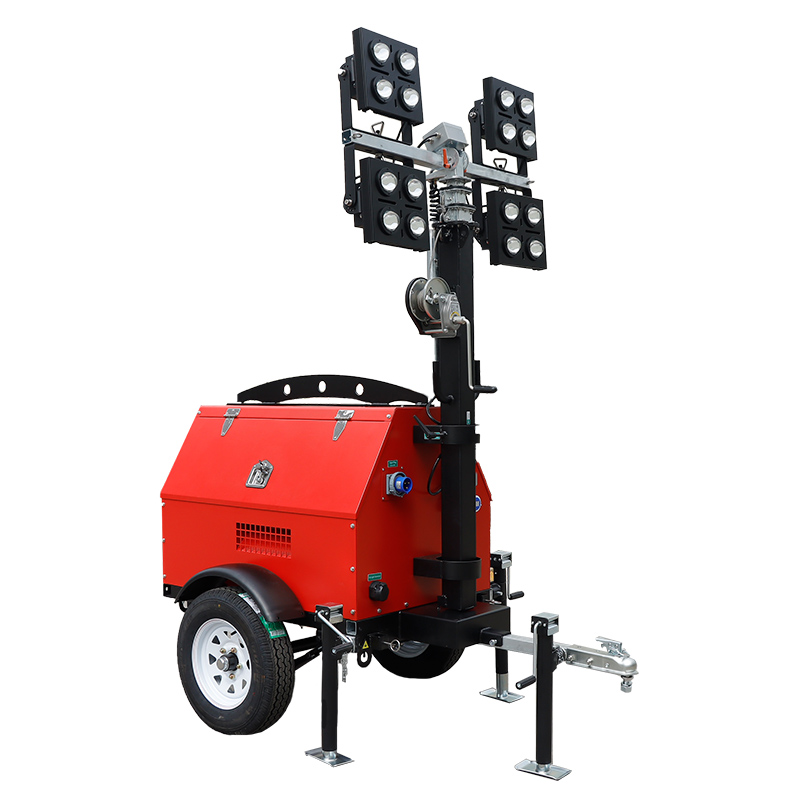
Manual mobile diesel light tower — 4×350 W LED + 4×1000 W metal halide, 8 m mast, Perkins/Yanmar/Kubota engine options.
How to Choose a Solar Light Tower Supplier
A strong solar light tower supplier brings more than a catalog. Evaluate candidates against clear criteria before you commit:
Industry experience that demonstrates product reliability and market understanding
Technical expertise, including detailed specifications and transparent testing processes
Reputation backed by customer reviews and case studies
Responsive communication for support and long-term partnership
Product quality and certifications such as ISO 9001 and IEC 62109
Durable materials, including corrosion-resistant aluminum components
A sensible balance of cost, quality, and performance
Ask each supplier to help you size the right configuration for your site layout and lighting requirements. Compare lumen output, battery autonomy, charging efficiency, mast height, and wind resistance rather than price alone. A good solar light tower supplier also confirms warranty coverage and spare-parts support.
Why Lehui stands out
Lehui combines deep industry experience with proven technical expertise. The company designs solar light towers that deliver strong battery autonomy for overnight operation, reliable weather resistance, and easy transport across changing sites. Lehui products meet recognized quality and safety standards, and the team helps you match each unit to your site conditions. You get clear specifications, dependable support, and a configuration built around your project goals. For a solar light tower supplier that balances output, runtime, and lifecycle savings, Lehui offers a dependable choice.
Decision Checklist Before You Buy
Project duration and budget questions
Start with the timeline. How many months will the site need lighting? A schedule under three months favors diesel on upfront cost. A schedule beyond 18 months lets solar fuel savings compound. Ask how many towers you need and whether the fleet will move between phases.
Then examine the money. What is your capital budget today? What annual fuel and service spend can you absorb? Calculate total cost of ownership across the full project, not just the sticker price. Ask whether rental or leasing fits better than purchase. Confirm the resale or redeployment value of each unit after the job ends.
Site conditions and compliance questions
Map the site before you choose. Does the location have reliable fuel delivery? How much sunlight does the region average across the year? Will winter light or heavy dust reduce charging performance? Check the ground conditions for trailer stability and mast setup.
Compliance questions carry equal weight. What are the local noise limits and permitted work hours? Does the site sit near homes, schools, or hospitals? Are air-quality rules in force? Does the project pursue LEED credits or corporate sustainability targets? Answer these honestly, and the right tower type becomes clear.
Fleet questions for mixed sites
If one site contains both quiet boundaries and remote high-load zones, plan a mixed fleet from day one. Solar units handle the main work areas and site offices; diesel units handle the far corners. Where loads are larger than lighting alone — pumps, workshops, camp power — a 30 kW hybrid energy storage system with PV and generator extends the same solar-plus-diesel logic to site power.
Choose solar for long-term, quiet, or sustainability-focused projects. Choose diesel for short-term, high-output, or remote sites with reliable fuel access. Weigh total cost of ownership, not just sticker price — most crews see solar payback in about three years, and incentives can shorten it further. Match each tower to project duration, site conditions, and site goals, and mix both across a fleet when it makes sense. For models that balance output, runtime, and lifecycle savings, trust a proven solar light tower supplier like Lehui.
FAQ
Is a solar light tower cheaper than a diesel light tower?
Solar costs more upfront. You save on fuel and maintenance over time. Most projects reach break-even within 18 to 36 months.
How long does a solar light tower run without sunlight?
A well-sized solar tower delivers three to five nights of autonomy. Generous battery banks keep your site lit through cloudy days, and battery banks typically last five to seven years with more than 2,500 charge cycles.
How much fuel does a diesel light tower use per day?
An LED diesel tower burns about 0.7 L per hour, or roughly 8.4 L over a 12-hour night. A metal halide unit uses about 2.5 L per hour, roughly 30 L over the same shift.
Which light tower suits a remote construction site?
Diesel fits remote sites with reliable fuel delivery. Solar works best when sunlight is consistent and fuel logistics are difficult.



 English
 français
 Deutsch
 italiano
 русский
 español
 português
 العربية
 Melayu
 Indonesia



 Network Supported