
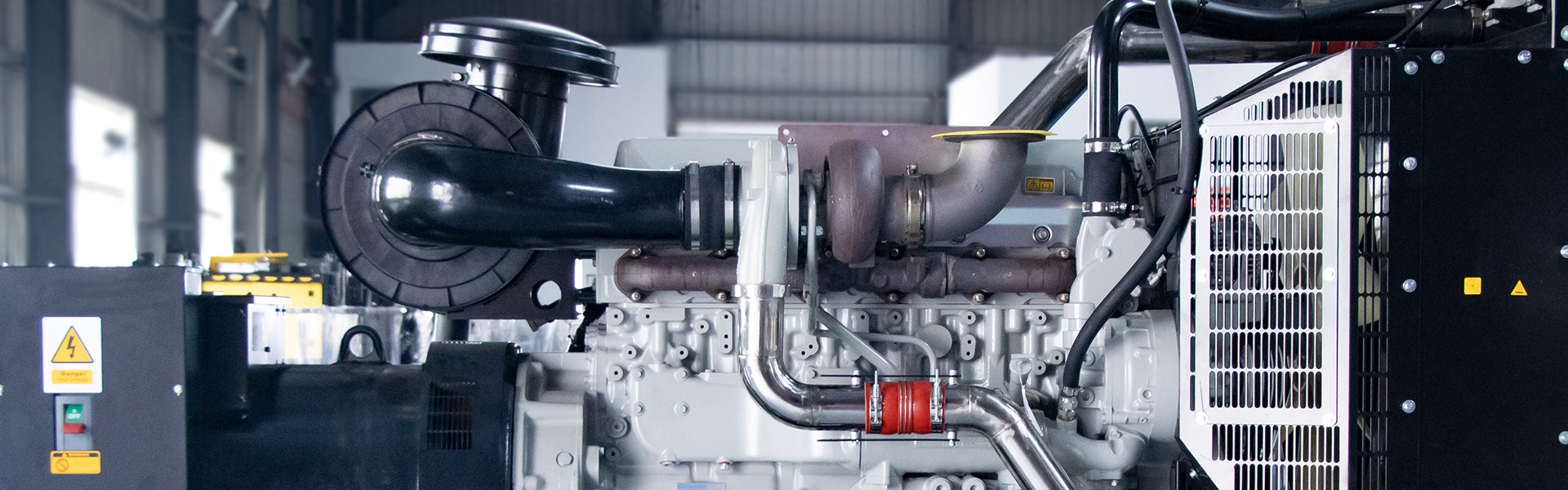
A 200 kVA diesel generator can be a suitable prime power source for factories, construction sites, commercial facilities, agricultural operations, and remote projects. However, selecting the right generator is not as simple as adding up the rated power of connected equipment. The generator must handle the actual operating load, motor starting current, power factor, future expansion, and site conditions over long operating hours.
For a 200 kVA generator operating at a 0.8 power factor, the rated real power is 160 kW. This is the basic conversion, but it does not mean every 160 kW installation is suitable for a 200 kVA prime-rated generator. The duty rating and load profile must also be checked.

A 200 kVA diesel generator rated at a 0.8 power factor provides approximately 160 kW of electrical power. For prime power applications, it can supply a variable electrical load for extended operating periods, provided the connected demand, average load, motor starting requirements, and site conditions remain within the manufacturer's published limits.
The following figures provide a quick reference for preliminary planning:
| Parameter | Typical reference value |
| Generator apparent power | 200 kVA |
| Power factor | 0.8 |
| Rated real power | 160 kW |
| Approximate current at 400 V, three-phase | 289 A |
| Typical application | Industrial and commercial prime power |
These are reference calculations, not a substitute for the generator's nameplate or technical datasheet. Actual output depends on the specified prime power rating, voltage, frequency, power factor, and operating environment.
The first step is to confirm that the generator is rated for prime power rather than relying on its standby rating. These ratings describe different operating conditions, and confusing them can lead to an undersized generator.
Prime Power (PRP) is intended for applications where the generator supplies the main electrical power to a facility or site. It supports variable loads and extended annual operating hours under the operating conditions and maintenance requirements specified by the manufacturer.
Emergency Standby Power (ESP) is designed for emergency use when the normal utility supply fails. It is generally intended for limited annual operating hours and should not automatically be treated as the generator's continuous operating capacity.
| Comparison | Prime Power | Standby Power |
| Main purpose | Primary electricity supply | Emergency backup |
| Operating pattern | Variable load over extended periods | Limited emergency operation |
| Annual operating hours | As permitted by the applicable rating | Limited according to the rating standard |
| Typical application | Remote factories, off-grid sites, and industrial facilities | Backup during utility outages |
For a project that depends on a diesel generator as its main power source, request the PRP output in both kW and kVA. Do not select a generator based only on a larger-looking standby kVA figure.
Before choosing a 200 kVA diesel generator, prepare a load list covering all equipment that may operate at the same time. Include production machinery, pumps, compressors, ventilation systems, lighting, control equipment, HVAC systems, and other electrical consumers.
For each item, record its rated power, operating current, power factor, starting method, and expected operating schedule. Where possible, use measured demand from an existing installation instead of relying only on equipment nameplates.
The basic conversion formula is:
Required kVA = Total real power (kW) ÷ Power factor
For example, if the simultaneous electrical demand is 120 kW and the overall power factor is 0.8:
120 kW ÷ 0.8 = 150 kVA
The calculated steady-state demand is 150 kVA. This is not yet the final generator size. Motor starting, future expansion, site derating, and the generator's prime power rating still need to be evaluated.

A generator should not be selected to match today's load with no room for change. Many industrial projects add machinery, increase production shifts, or install additional pumps and cooling equipment after commissioning.
A practical preliminary calculation is to add a reasonable reserve to the calculated demand. The reserve should reflect the project's expansion plan and load uncertainty; it is not a fixed rule that applies to every installation.
Consider this example:
| Calculation step | Result |
| Maximum simultaneous load | 120 kW |
| Power factor | 0.8 |
| Calculated apparent power | 150 kVA |
| Preliminary reserve allowance | 15% |
| Demand including reserve | 172.5 kVA |
| Potential generator size for further verification | 200 kVA PRP |
In this example, a 200 kVA prime-rated generator is a reasonable candidate for further engineering review. At a 0.8 power factor, its rated real power is 160 kW. If the facility's average demand is around 100 kW, the average loading is approximately 62.5% of the rated kW output.
This example does not confirm that every 120 kW installation can use a 200 kVA generator. A large motor starting directly across the line, an unfavorable load step, or high site temperature may require a different configuration or a larger unit.
Motor starting is one of the most important factors when sizing a diesel generator for prime power. Pumps, air compressors, crushers, conveyors, and industrial fans can draw substantially more current during startup than during normal operation.
A motor started directly across the line may draw several times its full-load current for a short period. If multiple motors start at the same time, the combined demand can cause a significant voltage dip and frequency disturbance.
Review the following details before confirming the generator size:
Where possible, use sequential starting to prevent several large motors from starting at once. Soft starters and variable frequency drives can also reduce starting demand, although their compatibility with the generator and connected equipment must be checked.
For demanding motor loads, ask the generator supplier to review the motor-starting calculation and alternator transient performance rather than relying only on the total running kW.
A generator's published rating is based on specified reference conditions. Actual available output may decrease when the unit operates at high altitude or in a hot environment. The engine and alternator manufacturer's derating data should be used to confirm the available power at the installation site.
Before ordering a 200 kVA diesel generator, confirm these site and electrical requirements:
| Specification | What to confirm |
| Altitude | Installation height above sea level and applicable output derating. |
| Ambient temperature | Maximum expected temperature and cooling-system requirements. |
| Voltage | Required output voltage and distribution system. |
| Frequency | 50 Hz or 60 Hz according to the local power system and equipment. |
| Phase | Single-phase or three-phase requirements. |
| Installation | Indoor or outdoor location, ventilation, exhaust, and acoustic requirements. |
Frequency selection is particularly important for international projects. A 50 Hz generator and a 60 Hz generator may have different engine speeds, alternator configurations, and output characteristics. Check the destination market and connected equipment before choosing the specification.
LEHUI provides generator options for different frequency requirements. Buyers can compare the available 50 Hz industrial diesel generators and 60 Hz generator options when preparing an export or industrial power project.

Fuel planning is another important part of prime power generator sizing. A generator that supplies the correct electrical output must also have a fuel system capable of supporting the site's required operating hours.
Fuel consumption varies with engine model, generator loading, ambient conditions, and maintenance condition. Do not assume that every 200 kVA diesel generator consumes the same amount of fuel per hour.
For an accurate estimate, request the manufacturer's fuel consumption figures at several load points, such as 25%, 50%, 75%, and 100% of the rated output. Then calculate the expected daily fuel requirement using the site's actual operating schedule.
A basic planning formula is:
Estimated daily fuel use = Fuel consumption per hour × Operating hours per day
For example, if the confirmed fuel consumption at the expected operating load is 25 litres per hour and the generator runs for 12 hours per day, estimated daily consumption is 300 litres. This is an illustrative calculation only; use the selected engine's fuel curve for procurement and fuel-storage planning.
For remote sites, also consider fuel delivery intervals, tank capacity, usable tank volume, fuel quality, and safe refueling arrangements. The fuel system should support the longest planned operating period without creating unnecessary storage or safety risks.
Once the electrical load has been calculated, the next step is to select a generator configuration that matches the site's operating environment and maintenance capabilities.
Common configuration choices include:
Other important specifications include the engine brand, alternator brand, controller, circuit breaker, cooling system, battery charger, fuel tank, exhaust system, and protection functions. These details affect long-term operation, service access, and compatibility with the facility's electrical system.
LEHUI's diesel generator set range covers a stated power range from 5 kVA to 5,000 kVA, with engine options including Cummins, Perkins, MTU, Scania, Volvo, Doosan, SDEC, Kohler, Kubota, Baudouin, Weichai, and FAWDE. Alternator options include Leroy Somer and Stamford. The final configuration should be confirmed against the project's required PRP output and technical specifications.
Choosing a generator supplier involves more than comparing the rated kVA and purchase price. Industrial buyers also need accurate technical specifications, suitable engine and alternator combinations, clear delivery requirements, and support during configuration.
LEHUI (Fuzhou) Intelligent Equipment Manufacturing Co., Ltd. supplies diesel generator sets and other power equipment for industrial, commercial, and project applications. Its generator range covers multiple power levels and engine brands, allowing buyers to discuss a configuration based on their actual load and installation requirements.
For a 200 kVA prime power project, the most useful information to provide when requesting a quotation includes:
LEHUI also offers project-specific configuration discussions. If the standard product configuration does not match the site conditions, buyers can discuss their requirements through the custom generator and equipment service.
A 200 kVA diesel generator should be selected only after the electrical and operating requirements have been checked together. Use the following checklist before confirming an order:
The correct generator is the one that can supply the site's real operating demand reliably, not simply the unit with the closest nameplate rating. A properly prepared load schedule and a verified prime power specification will make the selection process more accurate and help avoid costly changes after installation.
At a power factor of 0.8, a 200 kVA generator produces 160 kW of real power. The actual usable output must be checked against the generator's prime or standby rating and the specified operating conditions.
Yes, if the selected model is rated for 200 kVA prime power and its available output is sufficient for the site's running load, motor starting demand, and environmental conditions. A 200 kVA standby rating should not be treated as equivalent to a 200 kVA prime rating.
A prime-rated generator is designed to supply variable loads for extended operating periods under its published rating conditions. A standby-rated generator is intended for limited emergency operation. The prime output of a generator may be lower than its standby output, so buyers should compare the PRP and ESP figures on the datasheet.
Divide the total real power demand in kW by the load power factor. For example, 120 kW at a power factor of 0.8 requires 150 kVA before adding allowances for motor starting, future expansion, and site derating.
It depends on the motor rating, starting current, starting method, other connected loads, and the alternator's transient performance. A motor-starting calculation is necessary, especially when large motors use direct-on-line starting or several motors start together.
Fuel consumption depends on the engine model and actual load. Request the manufacturer's fuel consumption data at different load percentages and use the figure closest to the expected operating condition. Do not use a generic fuel figure as a guaranteed value.
Choose the voltage, phase, and frequency required by the local electrical system and connected equipment. Common industrial configurations include three-phase 400 V or 415 V at 50 Hz and 480 V at 60 Hz, but the correct specification depends on the destination market and project requirements.
Yes. Higher altitude reduces air density and can affect engine output and cooling performance. The available generator output should be checked using the engine and alternator manufacturer's derating data for the actual site altitude and ambient temperature.
Provide the required prime power rating, voltage, frequency, phase, load list, motor starting details, site altitude, ambient temperature, expected runtime, fuel autonomy, and enclosure preference. These details help the supplier recommend a suitable generator configuration.
LEHUI supplies diesel generator sets across a broad power range and offers different engine and alternator options. Buyers can submit their load and site requirements for a configuration review and quotation. Contact the LEHUI team through the website to discuss the required prime power specification.
For a project-specific recommendation, contact LEHUI Power Factory with your load schedule and operating conditions.
 NO.2 XIAHE ROAD GANZHE STREET,MINHOU COUNTY,FUZHOU FUJIAN CHINA
Please read on, stay posted, subscribe, and we welcome you to tell us what you think.


Copyright @ 2026 LEHUI (FUZHOU) INTELLIGENT EQUIPMENT MANUFACTURING CO., LTD All Rights Reserved.
 Network Supported
 English
 français
 Deutsch
 italiano
 русский
 español
 português
 العربية
 Melayu
 Indonesia

